
Do I Need Physiotherapy for My Tennis Elbow?

On an average day, you tend to do a lot with your arms.
These activities include brushing your teeth, combing your hair, making your morning cup of coffee, washing the dishes, and driving to run your daily errands.
You don’t think much about how much you’re using your elbows, wrists, and hands until you’ve run into sudden pain during your everyday activities.
This pain can be something you’re hoping goes away on its own.
Or maybe you’ve tried at home remedies like resting your arm, putting ice on it, or taking painkillers.
But when it’s not going away, what do you do?
If you’re in this dilemma, then physiotherapy can be the solution you’re looking for to eliminate your elbow, wrist, and hand pain once and for all.
What is Physiotherapy?
Physiotherapy is a treatment method for many pains, aches, and injuries of the body.
The goal of physiotherapy is to help you find the root cause of your pain, provide you with pain relief, and help your body recover so that you can get back to doing the things you want to do.
Physiotherapists are trained healthcare professionals that are experts in the human body and functional movement.
They’re skilled in assessing conditions of the human body and creating a treatment plan that targets specific areas that need to be managed to reduce your pain and optimize the way that you move.
Their treatment plan consists of interventions to increase your strength, flexibility, balance, mobility, and decrease your pain and discomfort.
In addition, physiotherapists will carefully consider your individual goals and help create a plan to get you where you want to be.
They’re able to effectively treat a wide population of people, including:
- Children
- Teenagers
- Athletes
- Adults
- Older adults
- Pregnant women
Physiotherapists are capable, knowledgeable, and experienced in rehabilitating, treating the symptoms, and eliminating the pain in a wide variety of injuries and conditions.
Some of these conditions that physiotherapists can treat include:
- Tennis elbow
- Back pain
- Shoulder pain
- Sciatica
- ACL injuries
- Fractures
- TMJ pain
- Balance and walking disorders
- Knee and hip osteoarthritis
- Concussions, dizziness, and vertigo
- Chronic pain and fibromyalgia
- Headaches, migraines, and neck pain
- Pre and postnatal pain
- Sports injuries
If you’re unsure that your condition can be treated with physiotherapy, contact us today for a FREE 20-minute phone or virtual consultation. Our physiotherapists will be happy to chat with you and discuss if physiotherapy is right for you.
How Will Physiotherapy Help with My Tennis Elbow?
Your physiotherapist will do a thorough assessment to determine what the root causes and contributing factors of your pain are and what treatments.
Next, they’ll determine which treatment options will be the most effective to heal your tennis elbow and guide you through your customized treatment plan.
Assessment
There are three main parts to a physiotherapy assessment. They are the subjective assessment, the objective assessment, and diagnosis and treatment plan.
Subjective assessment
The first component is a subjective assessment where the physiotherapists will ask you questions related to your tennis elbow and other factors that could influence your pain.
Some of these questions will be directly related to your tennis elbow such as when it started, what makes it feel better and worse, and how severe your pain is.
Other questions will be about other things like your past medical history, previous injuries, and your overall health so that your physiotherapist can know more about you and what could’ve caused your tennis elbow.
Objective assessment
Afterwards, your physiotherapist will move onto the subjective assessment.
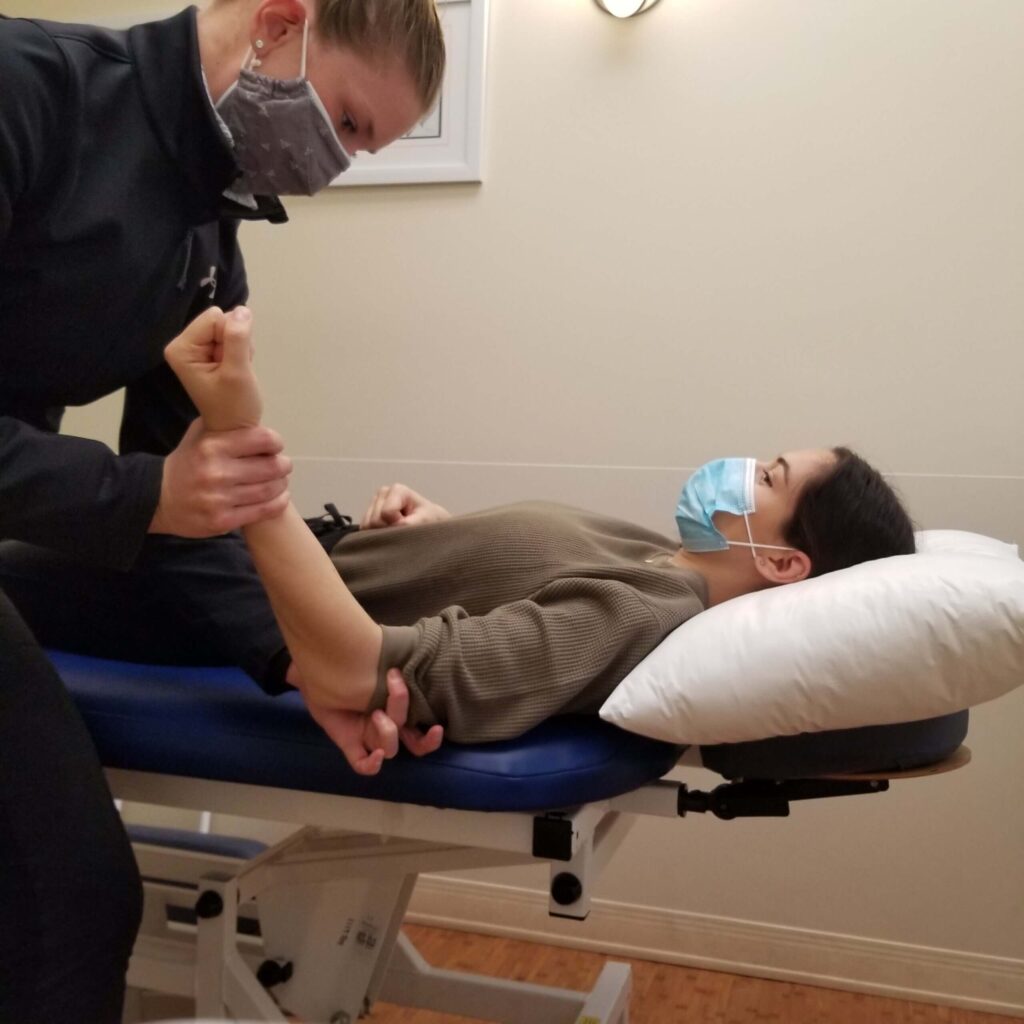
This is better known as the physical examination, where your physiotherapist will see how your body moves and what movements cause you discomfort.
For tennis elbow, this assessment will usually involve your physiotherapist taking a look at the range of motion and strength of your elbow and other close structures like your shoulder, wrist, and hand.
Your physiotherapist will find out which parts of your arm are weak, stiff, tender, or painful.

Diagnosis and Treatment
Diagnosis
Using the information that they’ve collected for the assessment, your physiotherapist is able to rule in or out different conditions that you may have.
Treatment
At this point, your physiotherapist will have a pretty good idea of what might’ve caused your tennis elbow and what it takes to fix it.
They’ll outline a comprehensive treatment plan so that you can fix the root of your issue and get rid of your pain.
Physiotherapists have a wide range of effective tennis elbow treatments that they can do depending on your specific needs.
Education
Education is defined as a learning experience that consists of teaching, giving advice, and behaviour modification to help better inform you about your tennis elbow and how to treat it.
In addition, your physiotherapist will be happy to answer any questions you have related to your tennis elbow such as things you should do, things you shouldn’t do, and how you can heal your tennis elbow faster.
Strengthening exercises
It’s important to strengthen the muscles in your forearm to treat weakness and imbalances in your arm.
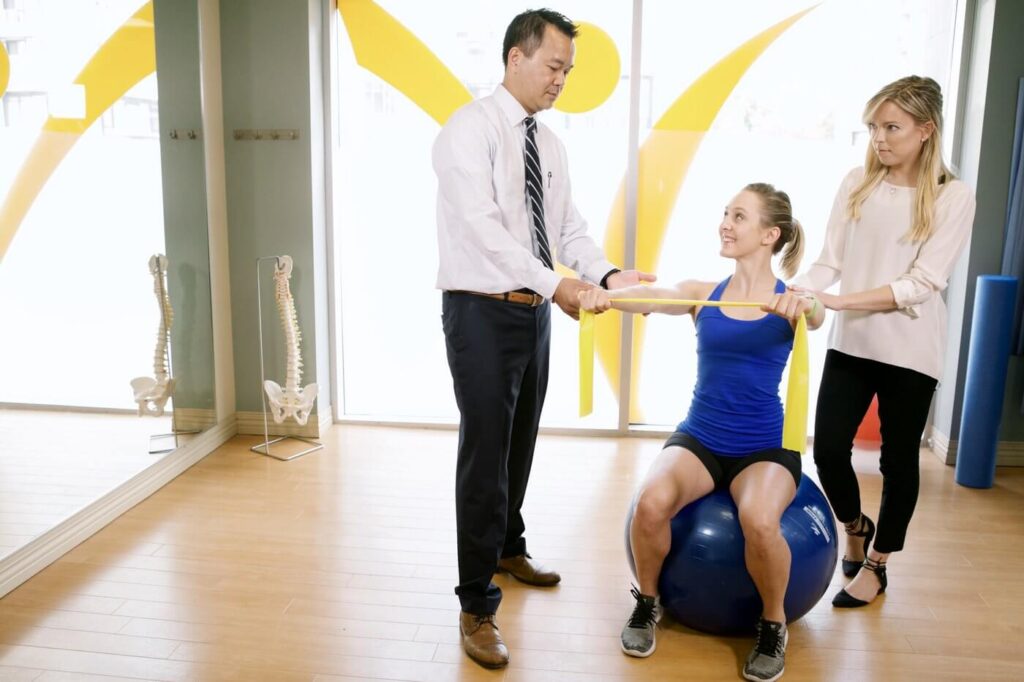
Your physiotherapist will likely start off with exercises that involve strengthening your muscle in one position and gradually progress you to doing exercises that help strengthen your muscle throughout a larger range of motion.
These strengthening exercises of your elbows, forearms, wrists, and hands will help to increase your muscle and tendon’s tolerance to heavier loads and get you back to doing arm activities without pain.
Stretching and Mobilization
Tightness and stiffness in your arm are also reasons you could be experiencing tennis elbow.
Your physiotherapist will teach you specific stretching exercises to keep your tendons and muscles mobile.
They might also use a physiotherapy treatment method called mobilization to glide your bones during a movement in a pain-free way to help restore your movement.
In fact, studies have shown that mobilization REDUCES pain and INCREASES pain-free grip strength!
Soft Tissue Massage
The goal of soft tissue massage for tennis elbow is to loosen up the structures in your arm, alleviate your pain, and improve your range of motion.
This helps to correct tightness in your arm so you can get back to feeling better as soon as possible and get you ready for your next activity.
Custom Bracing
Bracing helps to provide you with the support you need to manage your day-to-day activities with minimal elbow and wrist pain.
They also work to help avoid further damage to your elbow by setting you up in an optimal position that protects your elbow and promotes healing.
Your trained physiotherapist will custom fit you for your own elbow or wrist brace that suits your individual needs.
Kinesio Taping
Studies have shown that taping has substantial effect in relieving pain and improving pain-free grip strength in people with chronic tennis elbow. This pain relieving effect is amplified when Kinesio taping is combined with an exercise program.
Kinesio taping also helps to decrease swelling, manage scar tissue, stabilize your elbow, wrist, and hand joints, relieves pain, increase your muscle strength and activity, and much more!
Shockwave Therapy
Shockwave therapy has been scientifically proven as an effective treatment method for tennis elbow.
It helps to reverse chronic inflammation in your elbow, stimulate collagen production and healing, dissolve calcifications, release any trigger points, and decrease pain.
In fact, studies have shown that shockwave therapy relieves pain and cures tennis elbow in 5 sessions or less!
I’m Ready to See a Physiotherapist and Heal My Tennis Elbow!
Instead of waiting to see if your tennis elbow is going to get better on its own, why not kick start your journey today?
Book now with one of our highly rated physiotherapists.
At PhysioPlus Health Group, we’ve been a leading clinic in the Toronto community since 2001 because of our patient-centered, holistic, and effective care.
We know that no two patients are the same and we offer a wide range of services to fit your unique needs.
Call us at (437) 747-6236 to book your first appointment or to try a COMPLIMENTARY 20 minute phone or virtual consultation with one of our physiotherapists.
Be one of the thousands of people who we’ve helped make a full recovery and get back to their best pain-free selves!
This blog was written by Anna Zheng, a Physiotherapy student at the University of Toronto
Frequently Asked Questions
Should I use heat or ice for tennis elbow?
Both heat and ice can be helpful for tennis elbow, depending on when your tennis elbow started. If your tennis elbow symptoms are a recent finding of approximately 1-2 weeks, then using ice can help decrease pain and inflammation. If you’ve had tennis elbow for a while, then heat could be more useful to increase blood flow, relax your muscles, and reduce your pain.
What causes tennis elbow flare up?
Tennis elbow flare ups are usually caused by excessive repetitive movements of your elbow and wrist. These movements include swinging a racquet, turning a wrench, or any other movement that results in you constantly doing the same movement of your elbow and wrist. As a result, you can be experiencing pain in your outer elbow and weakness with gripping objects.
Can you see tennis elbow on an X-ray?
Tennis elbow is the result of a dysfunction of a tendon in your forearm, which doesn’t show up on x-ray. Tennis elbow is usually diagnosed just based on a physical examination by your doctor or physiotherapist. An x-ray may be ordered if a doctor suspects that you have a broken bone, dislocation, or other bone-related condition that might be the cause of your pain.