
Common Causes of Knee Pain and How to Prevent It!


Knee Pain
People of all ages experience knee pain. Whether you are a varsity athlete, a weekend warrior or a senior, knee pain does not discriminate. While knee pain can often be minor, it can be severe enough to stop you from participating in activities that you love.
As the knee is a complex joint with many structures including ligaments, muscles and bones, the causes of knee pain can often be hard to determine. Many of the symptoms of knee injuries can be quite similar which is why it’s always important to see a qualified professional such as a physiotherapist when dealing with knee pain.
With this being said, knowing some of the main causes of knee pain and their hallmark symptoms can bring you closer to the diagnosis and treatment you need!
Ligament Injuries
ACL
Many ligaments in the knee can become injured and cause pain. One of the most common is the Anterior Cruciate Ligament…or ACL for short.
This ligament connects your femur to your tibia to keep your knee aligned. Because this ligament has a very important role in joint stability, it can often be sprained or torn during sports injuries.
ACL tears often occur when pivoting or decelerating quickly as well as if the knee is hyperextended. If you’ve torn your ACL, you might have heard a “pop” or feel that your knee is unstable and may give out. Additionally, you have widespread knee pain that is hard to pinpoint.
MCL
Another ligament that is often injured is the Medial Collateral Ligament or MCL. This ligament is on the inner side of your knee and like the ACL, provides stability for your knee.
It is usually injured if there is a blow to the outside of your knee such as a slide tackle in soccer which causes your knee to “collapse in” termed knee valgus. Like an ACL injury, MCL sprains may make your knee feel unstable. However, if your knee pain is from an MCL sprain, you may have pain on the inner side of your knee.
Tendon Injuries
The patellar tendon at the front of your knee that connects your kneecap to your shin can also be injured and lead to knee pain. Patellar Tendinopathy or Jumper’s Knee is the inflammation of this tendon.
This can be caused by repeated movements of the knee such as running or jumping as the name suggests.
If Jumper’s knee is the cause of your knee pain, you may experience pain in the front of your knee below the kneecap that gets worse with repetitive exercise.
Generally, there is little to no pain at rest or swelling with Jumper’s Knee.
Meniscus Injuries
In your knee, there are two specialized pieces of cartilage known as your menisci. Your meniscus acts as a shock absorber for your knee and along with your ligaments, helps provide stability.
Meniscus injuries are common among athletes, especially those who play contact sports or sports that require a lot of squatting and twisting such as football, basketball, and wrestling.
If you have injured your meniscus, you may experience pain either on the inside or outside of your knee, an inability to fully bend or straighten your knee and possibly a “catching” or “locking” sensation in your knee.
Arthritis
Knee arthritis is the inflammation and degeneration of the knee joint. This may be caused by normal age-related changes or “wear and tear” (osteoarthritis), or autoimmune factors (rheumatoid arthritis) among many other reasons. It usually comes on slowly without a specific incident or injury to cause it.
Sometimes, arthritis affects the whole joint, so you may have widespread pain in your knee that is hard to localize. However other times, arthritis might be localized to the medial (inside) or lateral (outside) of the knee joint, and your pain might be localized to one of those areas specifically.
If arthritis is causing your knee pain, you might notice creaking, clicking, grinding or snapping noises when moving your knee along with a reduced range of motion.
Tips for Preventing Knee Injuries
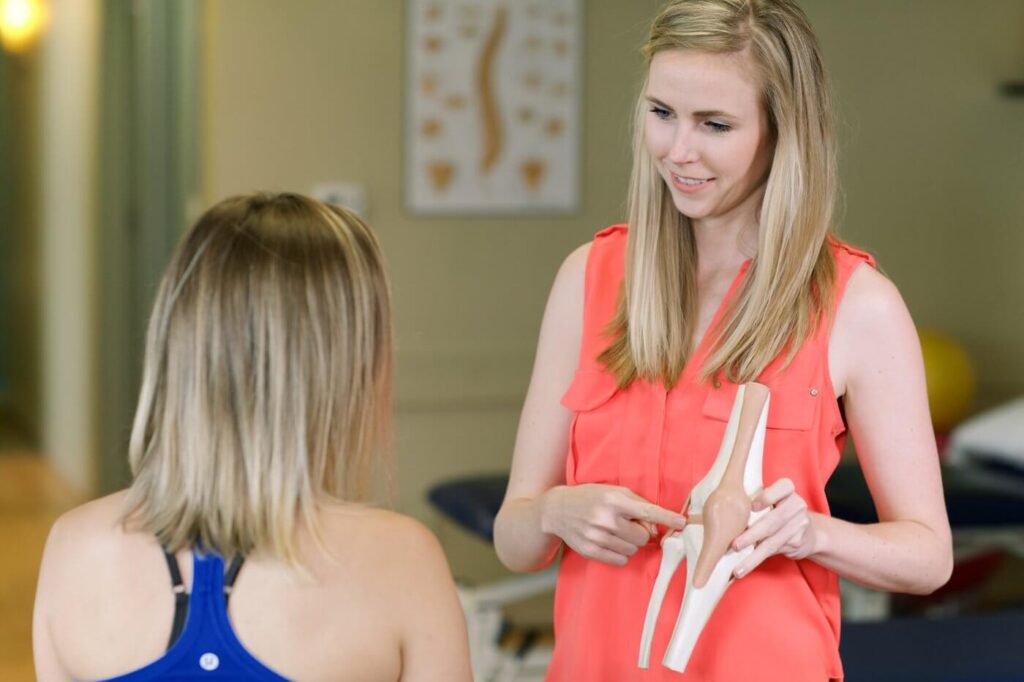
While the causes of knee injuries vary wildly, there are some easy steps you can take to keep your knee healthy and prevent injury.
- Warm-up. Before exercising, make sure to warm up by walking, riding a stationary bike or any other low-impact activity. This will help increase blood flow to your knee and prepare it for your workout.
- Strengthen Your Leg Muscles. Sticking to a strengthening routine for your leg muscles will help alleviate the pressure on your menisci and ligaments. This can be as simple as bodyweight exercises, lifting weights or using bands.
- Start Low Go Slow. When starting a new routine or activity, try to avoid sudden changes in exercise intensity or volume. This will allow your knee to build up a tolerance to the demands you are placing on it.
- Maintain a Healthy Weight. Easier said than done but managing your weight can greatly reduce your risk of a knee injury. The more that you weigh, the increased stress that is placed on your knees.
Recognize When to Seek Help
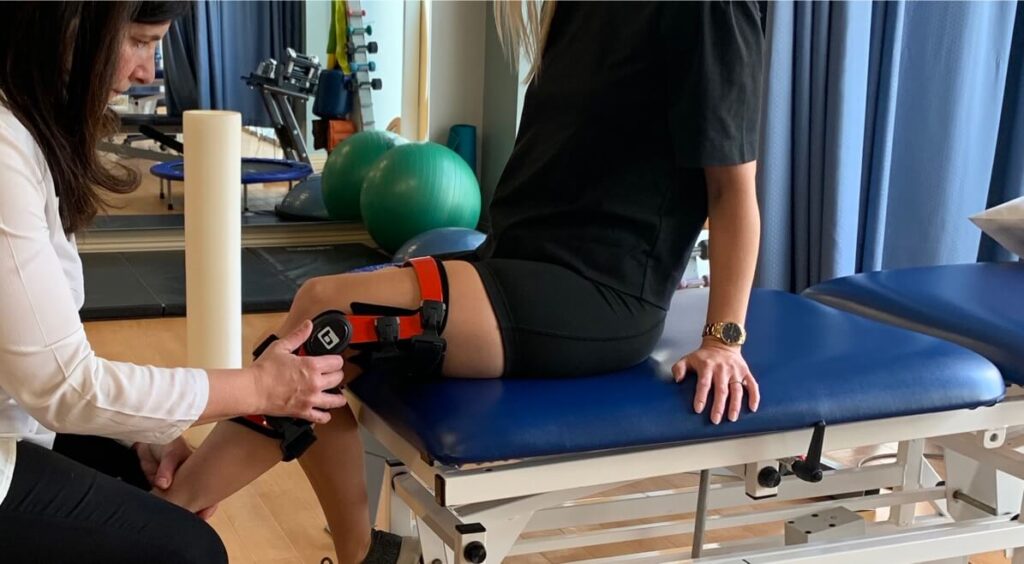
When you injure your knee, you may feel pain right away or it may take a couple of days to start. However, it is still important to get assessed as soon as possible. This way the specifics of your injury can be determined as well as a treatment plan to get you back to doing the things you love.
Treatment may include:
If your knee is hurting, contact us for a free 20-minute consultation where you can get honest advice from one of our physiotherapists! Our Hip and Knee Pain Program offers treatment options to effectively manage your hip or knee pain and help you get back to doing the sports and activities you love!
Book an appointment with one of our therapists today!
This blog was written by Luke Gregg, a Physiotherapy student at the University of Toronto
FAQs
Will my knee pain go away on its own?
Possibly depending on what’s causing your pain. If it is something like arthritis, your pain may not completely go away, but sometimes feel better. Other causes of knee pain such as a sprain may get better progressively over time.
Do I need to get an X-ray?
In some situations, an x-ray may be helpful, other times it may not provide any more information than a physical exam. If you are in severe pain after an injury, it is helpful to get an x-ray to make sure you don’t have a fracture.