
Smart Tips For Preventing Desk Related Body Pain


Do you work on a computer daily? With so many people working from home, we see many “office workers” reporting a variety of aches and pains. Whether its neck pain, low back pain or carpal tunnel, here are a few tips to help avoid these issues.
6 tips for preventing desk related back pain:
1. Plant your feet
As tempting as it is to cross your legs, planting the feet allows proper alignment from your ankles up to your hips and back. This therefore can help to prevent tension from developing in unwanted places.
2. Keep your head up
Make sure your monitor is directly in front of your face and that you don’t have to strain your neck to look down or around. Sitting up tall with the shoulders back will help to engage the muscles in your upper back and ultimately reduce strain throughout your neck.
3. Get a sit-stand desk
These desks are designed to be adjustable so that one can transition from sitting to standing as needed throughout the day. Research has shown that they can reduce discomfort and increase productivity.
4. Get a lumbar roll.
If you’re not sure if your chair is ergonomic, adding a lumbar roll can support the low back. It will help put your spine in ideal alignment so that your muscles don’t have to work too hard to keep you in position. If you don’t have a lumbar roll, take a towel or blanket and roll it up to place behind the small of your low back. You should feel supported and comfortable.
5. Take walking and standing breaks.
To ensure your back doesn’t get too stiff, get up from your desk every 20-30 minutes for a quick walk around the office. Set a timer as a reminder to get up, or every time your phone rings take the call and stand up. Setting a reminder will help to prevent you from getting caught up in a task that may have you sitting for hours on end!
6. Get an ergonomic assessment
Ultimately, having a professional look at your desk setup is your best bet for preventing injuries at the workplace. Among other things, they will asses the height of your screen, look at where your wrists sit at your keyboard, and check out the angle of your hips in your chair. They then will use this information to make recommendations about how to make you most comfortable throughout your work day. Don’t have the opportunity to have an ergonomic assessment? Talk to your physiotherapist or chiropractor about more tips to address any injuries and ideal postures to prevent things from getting worse or starting in the first place.
Here are 4 more solutions you can start implementing right away:
Keep your legs straight:
Crossing your legs can put compression on a nerve on the outside of your knee, and also lead to decreased circulation in your lower leg.
Don’t stick your legs out in front of you on a platform:
This position in the physio world looks very similar to a slump test, which assesses for tightness in the neural system. Sitting in this position and stretching your nerves for prolonged periods of time can lead to nerve sensitization. This puts your nerves at risk of injury by other simple movements.
Keep your feet in front of your chair:
Knee pain? Trouble getting moving once standing up? Tucking our feet under our chair puts pressure through our knee at an increased angle. This leads to discomfort when we eventually straighten them.
Don’t sit on your feet:
Holding the joints on the knee ankle and foot in end range positions eliminates the space between the bones. Putting our body weight on top further adds extra pressure on the joint. This can decrease blood to the tissue in between the joint surfaces, resulting in pain and increased wearing on the joint.
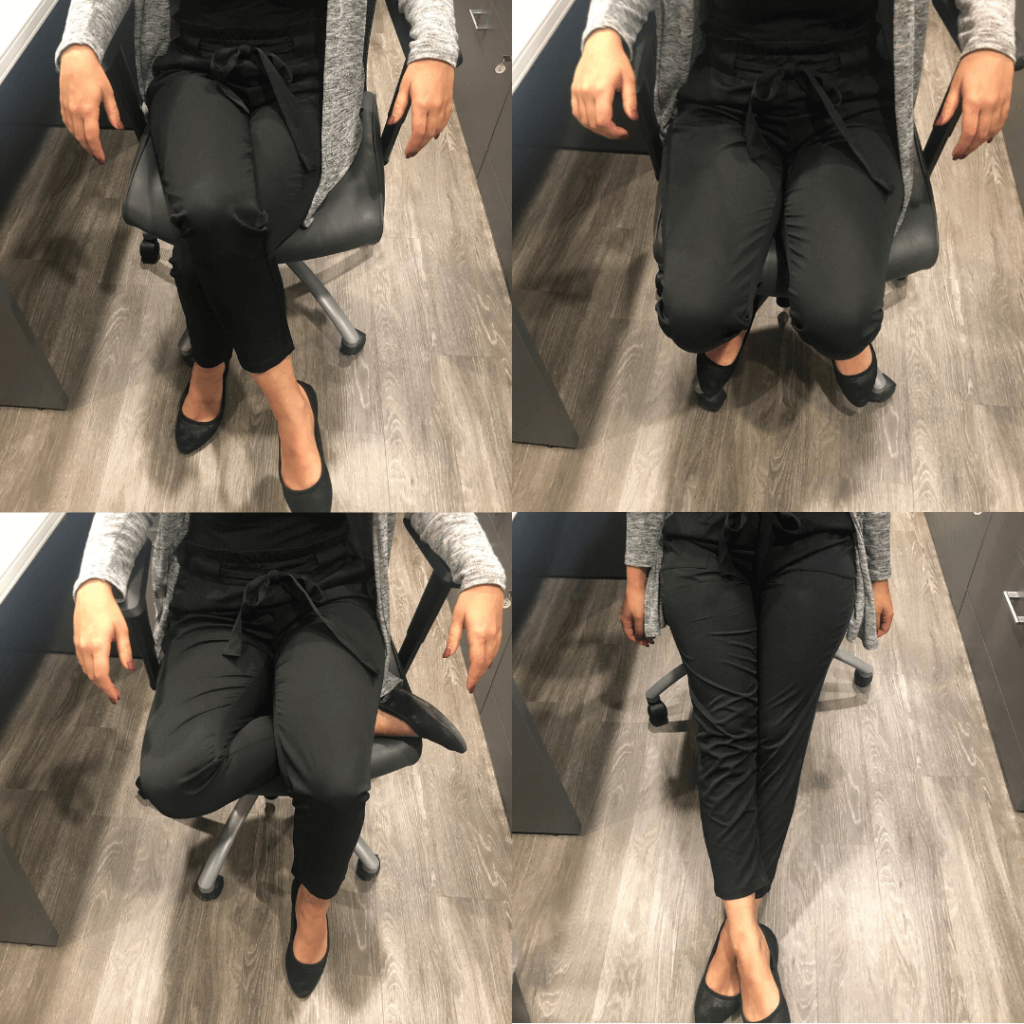
Sitting in these positions puts you at risk for developing pain and discomfort! Ultimately this will impact not only your job satisfaction, but your overall quality of life.
So what now…
Try the above tips, they can really make a difference if you implement them regularly. If you are still feeling discomfort after a week or so, consider giving us a call. One of our registered physiotherapists can help you pinpoint the exact issues you are experiencing. Then, they will develop a customized plan to help you resolve any pain. Best of all, it’s covered by most insurance plans. Click here to book now!