
How to Take Control of Your Knee Pain
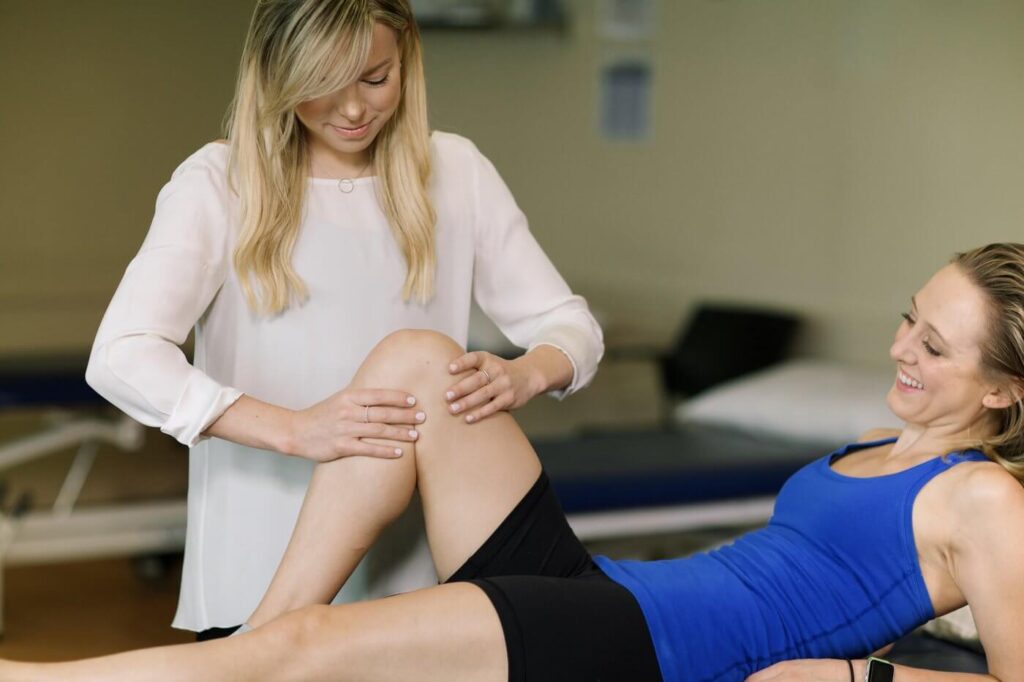

Knee pain can take over your life.
It can be so severe that it stops you from doing everyday things like walking, going up or down stairs, and more.
No matter if you’ve recently developed knee pain or if it’s something that you’ve been dealing with for a while, know that there are things that you can do to help it.
Our physiotherapists at PhysioPlus Health are highly skilled at solving knee pain that stems from a variety of different reasons.
In fact, one of our previous patients Toby R. stated that these knee treatment methods used and supported by our physiotherapists have been a “huge, life-changing benefit” to him.
His story of knee pain recovery is as follows.
“In September 2019, after years of increasing knee pain and a trip to the doctor, I was diagnosed with osteoarthritis. My doctor suggested the best course of action was physiotherapy and recommended Liz Frey. Over 18 months of patient instruction (including many virtual appointments during the pandemic) Liz has got me to the point where I can once more enjoy running and skiing and I am pain-free for the majority of the time. This is a huge, life-changing benefit to me.”
Ready to learn more about how to take control of your knee pain like Toby?
Read on to see a list of things you can do to eliminate your knee pain today.
6 Ways to Take Control of Your Knee Pain
1. Use the “RICE” Method
“RICE” stands for Rest, Ice, Compression, and Elevation.
This method is beneficial if you’ve had a sudden and minor injury to your knees or if you’re going through something like a knee arthritis flare.
- Rest your knee for 24-48 hours and avoid doing activities that aggravate it too much. If you try to get back to your regular activities too soon, you can risk further damage to your knee.
- Ice the knee that hurts using a sealable bag that’s filled with both water and ice cubes. Apply ice for 10 minutes, then take a 10-minute break. Repeat this about every 4 hours to control swelling and pain.
- Compression can limit blood flow to your knee to help prevent and reduce any swelling after a sudden knee injury or any other condition that causes swelling. To do this, wrap your knee with an elastic bandage at a moderate tension. Keep the bandage on during the day and take it off when bathing and before sleeping. If you’re experiencing any pain, swelling, numbness, or coldness, take off the bandage because it’s too tight!
- Elevation results in decreased pain and swelling in your knee. To do this, place your knee about 30 centimetres (one ruler length) above your heart for 15 minutes. You can do this by propping your leg up on a higher surface such as a table or pillow.
Depending on your injury, applying heat to the area can sometimes be helpful. Check out the infographic below for more information on choosing between ice or heat!
View this post on Instagram
2. Support Your Knee
When your knee is healing from an injury, it benefits from extra support during movement to reduce any uncomfortable symptoms.
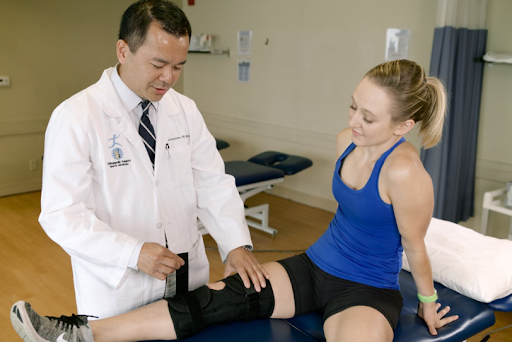
Equipment like supportive knee brace can be beneficial to you if you have pain during walking. See a doctor or physiotherapist for recommendations for your specific knee condition
3. Keep Moving!
Your knee condition can make it hard to keep active. However, it’s important that you keep moving so you can keep your leg muscles strong and keep your knee joint mobile. After all, motion is lotion.
Try doing low impact exercises that won’t flare up your knee pain. Some examples include swimming, walking on level surfaces, and cycling.
Generally, it’s a good idea to avoid any high impact activities that make your knee pain worse like running, high intensity interval training, repetitive stairs, or jumping.
Your physiotherapist will be able to give you advice on specific exercises that you’re able to do to keep your knees moving.
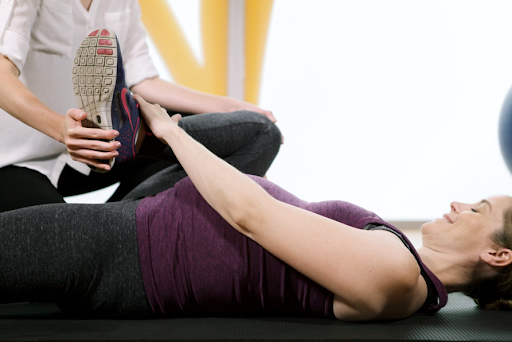
4. Check Your Footwear
It’s important that you wear supportive shoes, especially when you have knee pain.
Inappropriate footwear can cause more stress on your knees, which results in more knee discomfort. Examples of inappropriate footwear at this stage include flip flops and high heels.
Speak to your doctor so they can direct you to the most appropriate healthcare professional to assess your footwear and provide you with insoles or orthotics that can help relieve your knee pain.
In addition, if you own insoles or orthotics that you’ve had for a while, it could be time that you see a specialist to re-evaluate them and see if they’re still the right fit for you.
5. Modify Your Daily Activities
It’s hard to do things that you normally do with your knee pain. Try to modify your activities to reduce your pain.
For example, take frequent breaks when between prolonged standing or sitting if these positions cause pain.
Try to avoid excessive twisting and pivoting on your knees if possible. Instead, move your entire body and face toward the direction you want to go. This can reduce excessive rotational force through your knee and decrease the likelihood of further pain or injury.
6. See an Expert
If you’ve been experiencing uncontrolled knee pain that has been limiting what you’re able to do daily, it’s time that you get professional help for it.
A doctor can assess your knee and determine if there’s a reason for any imaging to be done to rule in and rule out certain knee conditions.
They may also recommend you see a physiotherapist which will create a treatment program to help strengthen your knees, improve your mobility, and allow you to do more without pain. Note that you don’t need a doctor’s referral to see a physiotherapist.
What Else Can I Do to Relieve My Knee Pain?
If you’re still experiencing problems with your knee, it might be a good idea to get your knee treated by a physiotherapist.
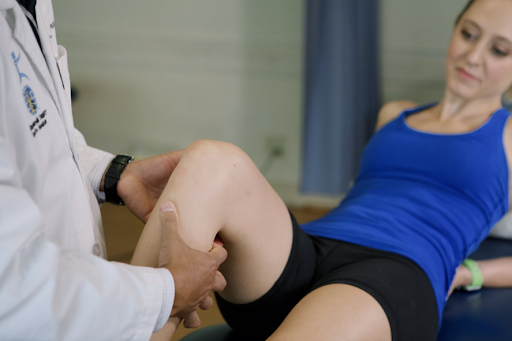
A physiotherapist can offer many types of knee pain treatment to address your specific knee problem. Some treatment options that your physiotherapist can offer consist of any combination of the following:
- Hands-On Manual Therapy
- Knee strengthening exercise program
- Knee bracing
- Acupuncture
- Therapeutic ultrasound
- Therapeutic laser
- TENS (Transcutaneous electrical nerve stimulation)
- Education
…and more!
Your physiotherapist will work together with you to create a treatment plan that caters to your individual lifestyle and needs.
I’m Ready to Get My Knee Pain Better!
Ready to book your first knee assessment and treatment session with a physiotherapist?
Book your first physiotherapy appointment today to take the first steps to getting your knee pain free.
At PhysioPlus Health, we’ve helped thousands of people recover from their knee pain and get them back to their favourite activities, and we’re eager to help you get there too!
This blog was written by Anna Zheng, a Physiotherapy student at the University of Toronto.
Frequently Asked Questions
Why does my knee crack or pop when I bend it?
It’s normal for our bodies to make sounds sometimes – think about all the times where your stomach rumbled, you sneezed, or you yawned! Cracking and popping sounds when you bend or straighten your knee could be because of popping air bubbles in the fluid that lubricates your knee joint which isn’t something to be concerned about. On the other hand, if you’re experiencing a “grinding” sensation or pain in addition to cracking and popping sounds, this is something to medically investigate. In some cases, this is a sign of early arthritis or that your knee cap is tracking improperly so it’s important to speak with your doctor to find out this is what’s happening with your knee.
Can my weight cause knee pain?
Your weight can be one factor that can contribute to knee pain. Increased body weight can put more stress on your knee which can contribute to pain and further knee problems down the road. Even a small decrease in your weight can lead to benefits in your knee health. Your weight isn’t the only factor that influences knee pain. Some other factors that contribute to knee pain include: age, sex, previous injuries, genetics, muscle mass, hip strength and your knee alignment.
Will a knee brace help with knee pain?
A knee brace https://physioplushealth.com/physiotherapy-treatments/custom-bracing/ can be one tool to help manage some kinds of knee conditions. Knee braces work by providing some compression, stability, and support to your knee. It’s important to remember that the wrong type of knee brace for you can give you further discomfort and actually make things worse. A physiotherapist can assess and diagnose your knee condition, as well as, recommend a knee brace that’s appropriate for your specific knee condition.