
Running Injuries and How Physiotherapy Can Help
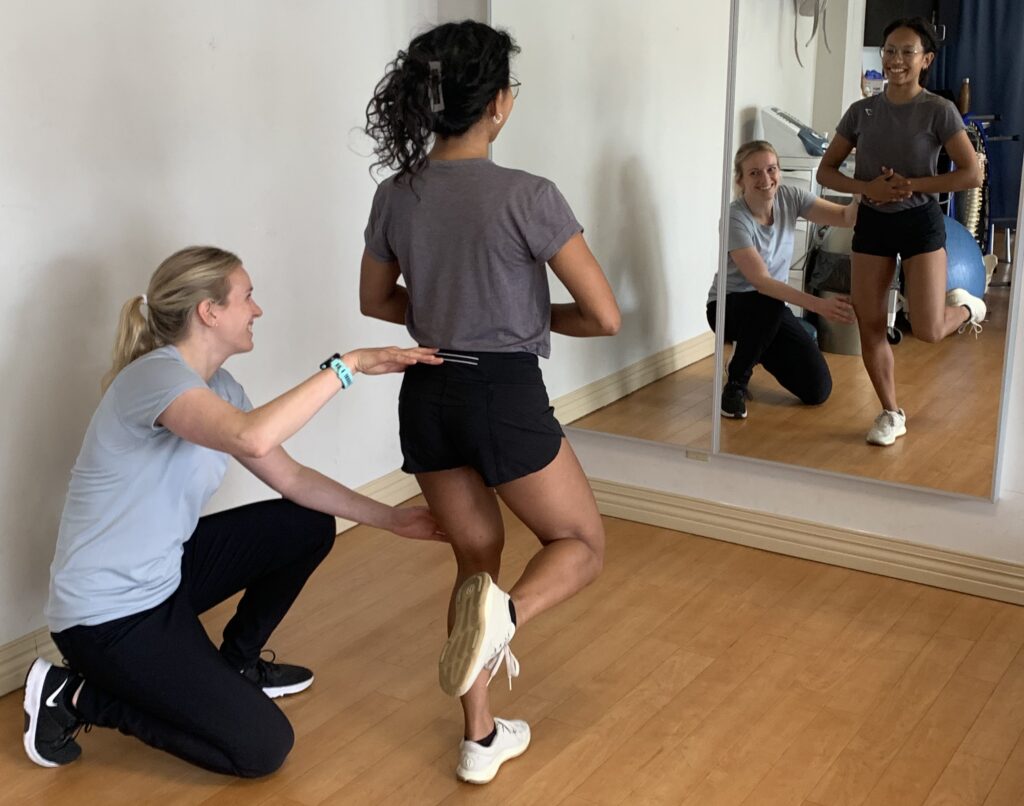

Whether you are a novice or a seasoned runner, injuries can be a frustrating setback that no one wants to experience. As frustrating as they may be, they are actually quite common. According to Runner’s World, about 65% of all runners suffer a running related injury each year. These injuries can be anything from repetitive overuse injuries to rolling your ankle.
At Physio Plus Health Group, our running experts understand the challenges that runners face and can help each and every one of you, get back to what you love doing in a safe and healthy way, as quickly as possible.
What are the Common Causes of Running Injuries?
Sometimes the injuries that we face when running are unpredictable and unavoidable, however there are a few things that commonly cause running injuries and can be modified by you to reduce your risk of suffering an injury!
Common causes of running injuries may include:
- An abrupt increase in weekly mileage
- Previous injury or an incomplete recovery
- Ignoring early symptoms
- Ill fitting gear such as old running shoes
- Running on harder or uneven surfaces may influence injuries
- Not stretching
- Not warming up
- Lack of strength
What are the Symptoms of a Running Injury?
As with any injury, the symptoms vary depending on the type of running injury you have suffered. However, there are a few red flags that you should look out for to ensure you get the right care at the right time and don’t push your body beyond its capabilities.
Below you’ll find a list of running red flags that could signal that you have a running injury:
- Sharp pain when running
- Pain that persists after you stop running
- Pain that makes it difficult to walk
- Swelling in a joint
- Pain occurs during exercise or within the first day of exercise
- Pain is in the muscles as well as deeper in the joints.
- Pain that does not go away with standard first aid treatment at home
If you said yes to any of these red flags above, call us today to book an appointment so we can help you get back to pain free running today!
What are the Most Common Running Injuries?
Many runners log hundreds or even thousands of kilometers a year, which can take a toll on your muscles, joints and connective tissues. The impact of the repetitive foot strikes, make your knees, legs and feet the most common injury areas for runners.

Runners Knee (Patellofemoral Syndrome)
Patellofemoral syndrome, also known as Runner’s knee, is a term that is generally used to describe the pain in the front of the knee and around the kneecap. This injury is common in sports that involve a lot of running or jumping. Athletes that have weakness in their hips or in the muscles around the knee, are also at a higher risk for developing this injury.
Runner’s knee can cause pain that is dull and can be felt in one or both of your knees, gets worse with prolonged sitting or exercise and increases in intensity when jumping, climbing stairs or squatting. This injury may also cause cracking, or popping sounds after prolonged periods of being still.
Achilles Tendinitis
Achilles tendinitis is inflammation of the tendon that connects your calf muscles to your heel bone. This injury is very common for runners who have recently increased their mileage or the intensity of their running.
This injury can cause a dull pain in your lower leg above your heel, swelling along your achilles tendon, decreased range of motion when flexing your foot toward your shin and even a warm feeling over the tendon itself.
IT Band Syndrome
Your iliotibial band, or your IT Band for short, is a long band of connective tissue that runs from your outer hip all the way to your knee. Its main function is to help stabilize your knee, specifically when you are running or walking.
IT band syndrome is caused by repetitive friction of this band when it rubs against your leg bone. The rubbing of this band occurs when your IT band is tight, which is usually due to weak gluteal muscles, abdominals, or hips.
It can cause a sharp pain on the outer side of your leg, typically in the area right above your knee. The IT band may be tender to touch and the pain often gets worse when you bend your knee.
Shin Splints
Shin splints refers to the pain that occurs along the shin bone. Similarly to achilles tendonitis, shin splints can occur when you increase your running volume too quickly. Most of the time shin splints are not serious and go away with rest, however, if they are left untreated they can develop into stress fractures.
With shin splints you’ll have a dull pain along the front or inner part of your shin bone that gets worse when you exercise, is tender to the touch and may have some mild swelling.
Hamstring Injuries
Your hamstrings play a large role in decelerating your lower leg during the swing phase of your running cycle. If your hamstrings are tight, weak or even just tired, they may be prone to injury.
It is usually uncommon for distance runners to experience a sudden hamstring tear like sprinters, but it is not unusual for them to experience hamstring strains. This type of injury typically comes on slowly and is caused by repetitive micro tears in the muscle.
You will typically feel a dull pain in the back of your upper leg, the muscle is tender to the touch and you feel stiffness and weakness in your hamstring.
Plantar Fasciitis
Plantar fasciitis is one of the most common foot injuries. There is a thick layer of tissue called the fascia that runs along the bottom of your foot, which can become irritated and begin to degenerate.
This tissue acts as a spring when you walk or run, and can be put under increased stress when running long distances. Muscle tightness or weakness in your calves can also put you at risk of developing plantar fasciitis.
Typical symptoms can include pain under your heel or midfoot that develops gradually, a burning sensation on the bottom of your foot, the pain is also usually worse in the morning or after prolonged activity.
Stress Fractures
A stress fracture is a hairline crack that occurs in your bone after it has been put under repetitive stress or impact. In runners, stress fractures occur the most in areas such as the top of the foot, the heel or the lower leg.
When you have a stress fracture, the pain gets worse over time and can progress to the point that you have pain even at rest and there may be other signs such as swelling, bruising, or tenderness over the area of the fracture.
Ankle Sprain
Ankle sprains are when the ligament between your leg and your ankle is over stretched. Sprains occur most often when you land on the outer side of your foot and roll your ankle over.
You will typically see discoloration, pain swelling, bruising and limited range of motion when you suffer an ankle sprain.
Hip Adductor and Hip Flexor Strain
Hip adductor strains occur when there are microtears to the muscle or tendons on the inside of your thigh resulting in pain, decreased range of motion, and tenderness on the inside of the hip or thigh.
A hip flexor strain is similar to an adductor strain however it occurs to the muscles in the front of the hip, resulting in pain in that area that can travel down into the front of the thigh.
How can Physiotherapy Help with Running Injuries?
There are two main ways a physiotherapist can help runners with running injuries. These include treating running injuries after they have already happened and help you get back to running, and being proactive and preventing running injuries before they even happen.
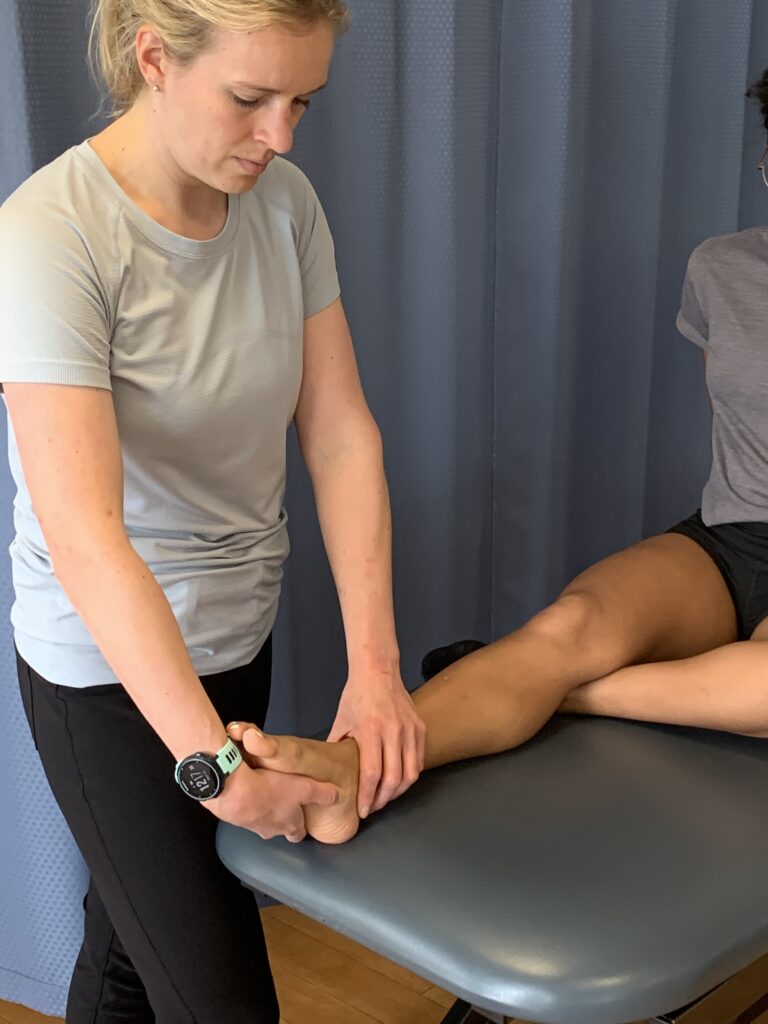
Treating Running Injuries
What is physiotherapy? Physio generally consists of three important phases: pain relief, strengthening, and functional integration. If you can’t run comfortably or suffered a running injury, a physiotherapist will cater your treatment to plan around specific movements designed to increase your strength, flexibility, balance and overall mobility to get you back running in no time
Physiotherapists are well equipped with MANY different treatment methods to maximize your function and resolve these pesky running injuries. This can include manual therapy, which focuses on moving the soft tissues in your body to help restore your movement and relieve your pain. They will also prescribe you a customized exercise plan that will help you return to movement without pain by providing and teaching you exercises that help focus on muscle strength, flexibility and stability. They can also provide you with some additive treatments including shockwave therapy, acupuncture/dry needling and taping.
Running Analysis
Running Assessments are performed by physiotherapists with specialized training in running analysis, running injury treatment and prevention. They are used to help:
- Runners or athletes who have been injured or are in pain and are looking to get back into the sport, and
- Runners or athletes who are looking to improve their form and physical performance.

During a Running Assessment, you will be asked to run on a treadmill for a few minutes at a few different speeds. At each of these speeds, video will be taken from different angles. Your physiotherapist will then use the footage from our slow motion video capture software to measure and analyze each phase of your running gait to help determine areas of risk and key issues.
The comprehensive assessment looks at:
- Cadence
- Foot strike
- Stride length
- Pelvic control
- Vertical displacement
- Muscle imbalances (ie. weakness or tightness)
- Joint mechanics and alignment
They will identify faulty mechanics and bad habits that lead to pain and injury, help improve your gait efficiency and target areas of risk so that you reduce pain, can keep running, and reduce your risk of injuries along the way.
They will give you an individualized treatment plan that can include the following:
- Real time running cues
- Running drills to add to your training
- Home exercises to work on your specific concerns,
- Hands-on physiotherapy treatment to treat joints or muscles that may be contributing to any compensations when running
Learn more about Lauren Kanko, Physiotherapist and Running Expert at PhysioPlus Health Group.
Get started on your running assessment today! Request a consultation with one of our Running Experts, so you can take the first steps to running and moving your best!
MEET OUR RUNNING EXPERT

LAUREN KANKO
- Physiotherapist & Running Expert
- 15+ years of Competitive Running
- Competing in Triathlons since 2015
- Running Injury Treatment Expert
Are there Exercises or Stretches that can Help Prevent Running Injuries?
Exercises for runners have a large role in improving how well you run and decrease how easily you get injured. Strength training will help you run faster and more efficiently, and reduce your risk of injury. The five main locations runners should be strengthening include the quadriceps, hamstrings, calves, glute max and glute medius.
Below are five exercises that you can do to target these areas!
1. Glute Max Focus: Hip Thrusts
Place your back on an exercise ball or bench and your glutes on the floor. Place one weight horizontally across the hips. Squeeze your glutes and press the dumbbell straight up until the hips align with your shoulders and knees. Make sure you keep your core engaged and you are not arching your back when you do this!
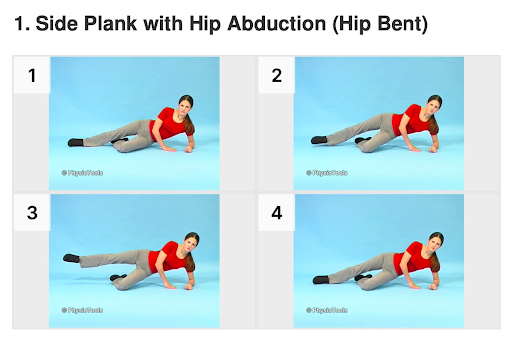
2. Glute Medius Focus: Side Lying Hip Abduction
Lying down on your side, rest your head on your arm and bend your knees with one leg on top of the other. Keep your feet together and lift your top leg so that your knees are separated. Make sure to keep your hips steady and to not roll back when lifting your leg. Slowly lower your leg and repeat. You can tie a resistance band around your thighs to increase the challenge.
3. Quadricep Focus: Heel Elevated Goblet Squats
Start by holding either a dumbbell or kettlebell in front of your torso. Elevate your heels securely on either a plate or a slanted board. Push your butt back and lower down into a rep going as deep as possible. Press into the floor to stand back up to repeat.
4. Hamstring Focus: Hamstring Sliders
Start by lying down on your back with your heels planted on slider discs or hand towels. Keep your core braced to maintain a neutral spine, lift your pelvis up. Keep your feet hip distance apart. Slide the feet out while keeping your spine straight. Without flexing your hips, pull the heels back in towards your butt then repeat.
5. Calf Focus: Single Leg Heel Raise
Stand using something sturdy like a wall or a counter for balance only. Lift one foot and stand with your weight on the other foot with your knee straight. Rise up on your toe, hold for 3 seconds and slowly lower back down onto your heel and repeat. Do this on both legs.
It is important to make sure that you not only strengthen your muscles but also stretch them, to increase your flexibility, enhance your recovery and again reduce your risk of injury.
Key Stretches for Runners:
Quadricep Stretch: standing on one foot, pull the other foot toward your glutes while pressing your hips forward so you feel a stretch in the front of your thigh. Repeat on the other side.
- Hamstring stretch: While seated, extend one leg in front of you, and reach forward toward your foot while the other knee is bent. Make sure you try to keep your back straight while leaning forward to get the most out of this stretch.
- Calf Stretch: Lean against a wall with one leg straight behind, and the other bent in front. Push the heel of the back leg down.
Make sure you hold each of these stretches for at least 30-45 seconds as this is the amount of time it takes for our muscles to adapt and make long term changes.
Ready to Run Stronger and Safer? Book Your Running Assessment Today!
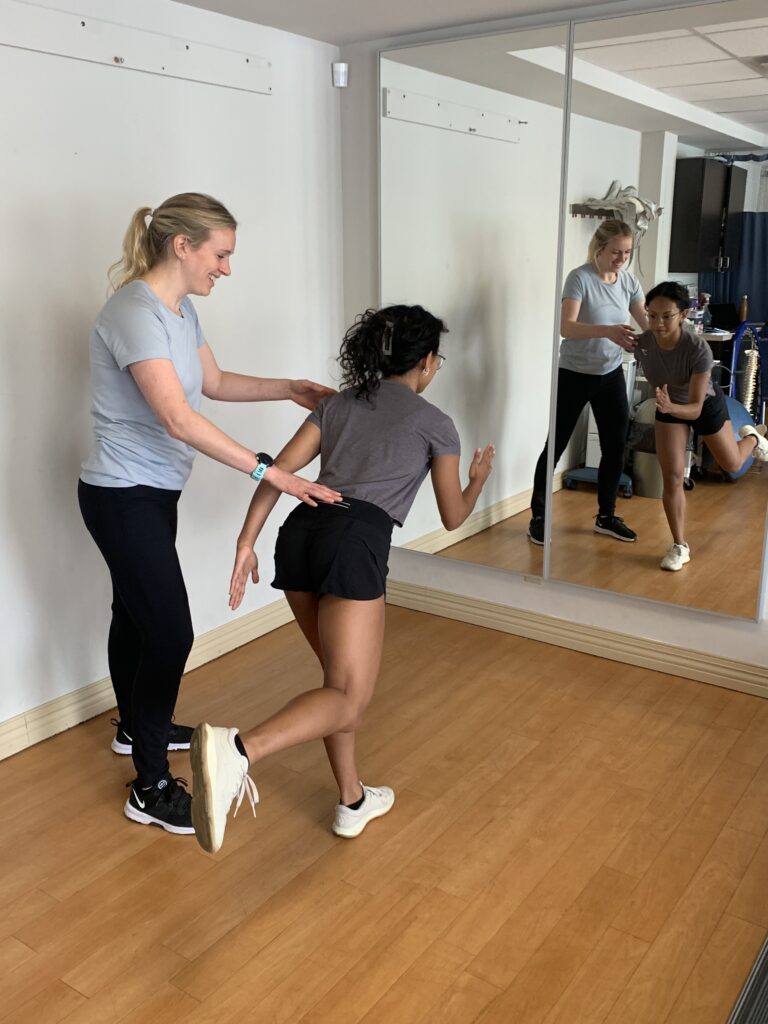
This blog was written by Francesca Biondi, a Physiotherapy student at the University of Toronto
Frequently Asked Questions
Are types of shoes or gear better for preventing injuries?
Ensuring that you have a pair of supportive shoes that are made for running will help prevent your feet, knees and back from getting sore. However it is important to note that there is a difference between running shoes for road running and trail running. If you plan on running on the road, look for ample cushioning for adequate shock absorption. If you plan on trail running you want to find a pair of shoes that have excellent traction and be durable to withstand the elements.
It is also important to have the proper amount of stability based on your foot’s alignment. To ensure you have the right shoes for your running journey, you can see a Chiropodist to get an assessment of your feet to find out the type of shoe for you!
When should I seek medical attention for a running injury?
Some key things that you should keep an eye out for include:
– Sharp pain when running
– Pain that persists after you stop running
– Pain that makes it difficult to walk
– Swelling in a joint
– Pain that lasts longer than a week
If you experience any of these symptoms, it is a good idea to seek medical attention whether that be your doctor or physiotherapist so you can be assessed and properly diagnosed, so you can take the right steps towards recovery.
How long does it typically take to recover from a running injury?
Many running injuries are a result of overuse. Depending on the severity, you may need to take a break from running for several weeks to allow for proper healing. At times it can take anywhere from 6 to 12 weeks, but seeing a physiotherapist can help enhance your recovery and make sure you are returning to running in a safe manner.