
Top 5 Reasons to See a Physiotherapist After a Concussion


If you or someone you care about has experienced a concussion, you may be wondering what the next steps look like. While a concussion is often thought of as just a bump on the head, it’s actually a type of mild traumatic brain injury (mTBI) that can affect how you feel and function. With the right care and support, most people recover fully and return to their usual activities.
At PhysioPlus Health Group, our collaborative evidence-based concussion treatment can help you! Our experienced physiotherapists create personalized treatment plans that promote healing, restore function, and help you achieve the goals that matter most to you!
Getting involved with physiotherapy early in regard to managing your concussion can speed up recovery and reduce long-term effects of a concussion. We are here to guide you every step of the way.
Contact us to schedule a complimentary consultation!
What is a concussion?
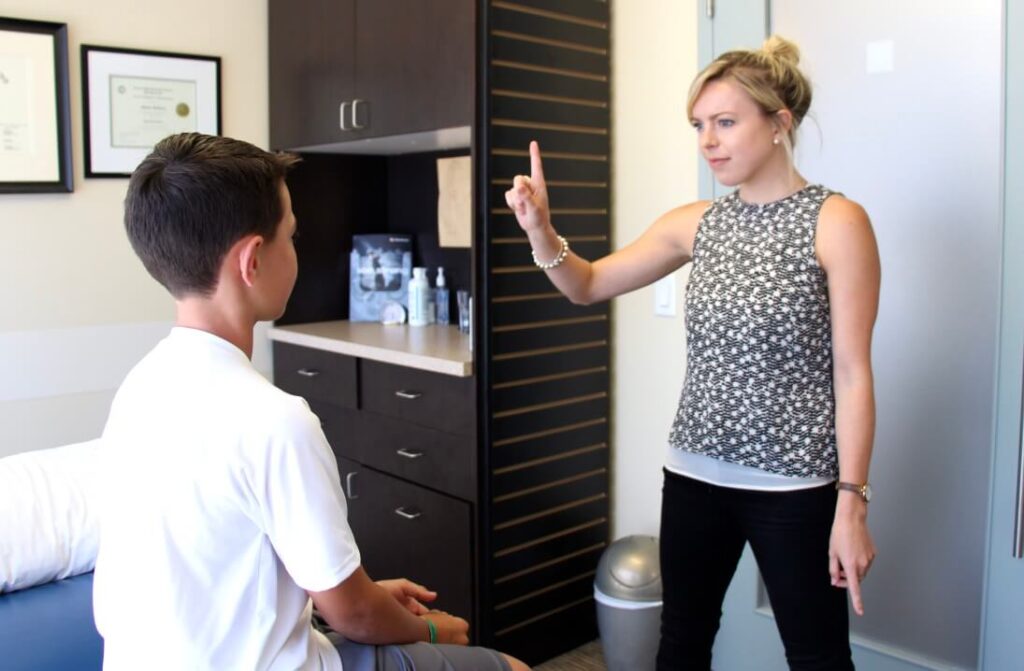
A concussion can occur in many different settings and ways. A concussion is a type of mild traumatic brain injury caused by a jolt or hit to the head or body. Having this sudden movement or impact occur can disrupt normal brain function. This ultimately leads to the wide range of physical, emotional and cognitive symptoms that you may be experiencing after a concussion.
Some individuals may experience loss of consciousness with a concussion, but this is not always the case for most individuals.
It is important to take any head injury seriously, even if the symptoms appear mild at first.
What are the common signs and symptoms of a concussion?
Symptoms of a concussion can appear immediately, or develop over hours or days.
Common signs you are experiencing a concussion include:
- Feeling pressure around your head
- Headaches
- Dizziness/ balance issues
- Blurred vision
- Nausea/ vomiting
- Sensitivity to light or noise
- Difficulty with concentrating
- Fatigue
- Irritability and mood changes
It is important to note that every concussion is different, and symptoms can widely vary from person to person.
When should you see a physiotherapist after a concussion?
It is recommended to see a physiotherapist within 2-10 days after a concussion, especially if you feel that your symptoms are hanging around for a long time or worsening. However, we can support you at any time during your concussion journey!
Physiotherapy can help address specific signs and symptoms of concussion that you are experiencing. Our physiotherapists take an individualized treatment approach geared to help you recover, whether you are an adult or a child!
Top 5 Reasons to See a Physiotherapist After a Concussion
1. Personalized Recovery Plan
Our physiotherapists will develop a personalized recovery plan tailored to your goals based on a comprehensive assessment approach supported by evidence-based best practice.
2. Symptom Management
Getting involved with a physiotherapist, no matter where you are in your recovery journey, can help get some relief from the symptoms that impact your daily life.
3. Faster + Safer recovery
Our physiotherapists are trained to safely guide you through concussion recovery using evidence-based strategies to promote recovery. Starting treatment early can help reduce the risk of prolonged symptoms and secondary complications.
4. Targeted treatment for hidden issues
Sometimes, the force that caused your concussion has the ability to impact surrounding structures, such as the neck, jaw, and back. Many post-concussion headaches are caused by neck dysfunctions, which our physiotherapy team can treat.
5. Safe return to activity
Get guidance on when and how to safely return to what is important for you – whether it is work, school, or sports – or any combination!
Contact us to book an appointment today!
What treatments do physiotherapists use for concussion recovery?
Your physiotherapist will develop an individualized treatment plan based on your presenting assessment, focusing on best managing your recovery.
Concussion-focused physiotherapy may include:
- Vestibular rehab: For dizziness and balance problems
- Visual and cognitive exercises: To improve focus and reduce eye strain
- Manual Therapy: To relieve neck and upper back tension that may be contributing to post-concussion headaches
- Graded exercise programs: Gradual introduction of physical activity
- Education and symptom management: Understanding what your symptoms mean, and how to best monitor and manage them
Treatment is always customized based on how you are presenting and your recovery timeline!
Start Your Concussion Recovery Today!
Our concussion experts at PhysioPlus Health Group are here to help you recover safely and effectively. Get the care and guidance you need to restore your balance, focus, and confidence.
Book a concussion physiotherapy session with one of our team members today!
This blog was written by Mia Kulafi, a physiotherapy student at the University of Toronto.
FREQUENTLY ASKED QUESTIONS
Can physiotherapy help with balance problems after a concussion?
YES! If you are experiencing balance problems after a concussion – we are here to help! Our physiotherapists use vestibular rehabilitation to target the inner ear systems that connect to the brain, which are responsible for your body’s balance and coordination. Targeted physiotherapy treatments can significantly reduce dizziness and improve stability.
Can physiotherapy help me recover faster after a concussion?
YES! Starting your treatment journey early can shorten recovery time, reduce symptoms, and help prevent long term complications. Let our team at PhysioPlus Halth Group work with you to develop a personalized treatment plan to start your therapy journey today!