
The 7 Most Common Causes of Knee Pain


Knee pain is hard to deal with.
It affects people of all ages and can be from an injury like a hamstring strain or a medical condition like arthritis.
There are many structures in and around your knees including muscles, tendons, ligaments, cartilage, and bones.
When one or a combination of these structures are affected, it can cause pain that impacts your everyday function.
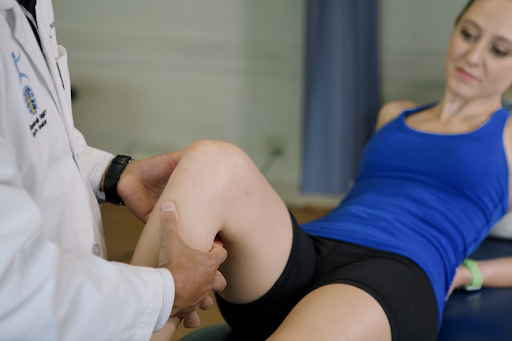
The 7 Most Common Causes of Knee Pain
Here’s a list of conditions that commonly cause knee pain.
1. ACL Injury
Your ACL, which is your anterior cruciate ligament, is one of the four ligaments that connects your thigh bone (femur) to your shin bone (tibia).
An injury to the ACL is common in athletes who play sports that require them to suddenly change directions while their foot is planted on the floor.
This injury can also be from direct impact from another person or object. When this injury happens, the ACL can be overstretched, partially torn, or fully torn.
Some common sports where ACL injuries occur include soccer, basketball, and football.
Although less common, the other three ligaments, known as your medial collateral ligament (MCL), your lateral collateral ligament (LCL), and your posterior collateral ligament (PCL), can also get injured and cause knee pain.
Check out the video below to see how physiotherapists can effectively assess for a knee ligament injury.
View this post on Instagram
2. Hamstring Strain
The hamstring muscle, or the muscle that runs on the back of your thigh, is a muscle that’s commonly injured.
A strain is also known as a “pulled” muscle and is often caused by a sudden stretch or contraction to the muscle.
When this happens, some of the muscle fibres can tear and cause you pain when you’re doing things like walking or going up and down the stairs.
Depending on the severity of the injury, you could get symptoms like:
- pain
- tenderness when touching the hamstring
- swelling
- bruising
Another common muscle injury that could be the cause of your knee pain is a quadriceps strain, which is when the FRONT of your thigh muscle gets overstretched.
3. Torn Meniscus
The meniscus is a major cartilage in your knee that acts as a shock absorber between your thigh bone and your shin bone.
This cartilage can be torn if you suddenly twist on your knee while you’re putting weight on it.
A torn meniscus can feel like your knee is unstable and might give away at certain times. You might also have trouble moving your knee and straightening it like you normally do.
When there’s a small tear, strategies like rest and ice could be effective at managing your knee discomfort.
In more severe cases, you could feel that your knee “locks” and feels stuck in one position. When this happens, it could be an indication that a fragment of your meniscus isn’t where it’s supposed to be.
If you find your knee is locking in certain instances, it’s important that you seek medical attention from your doctor to determine appropriate next steps.
4. Dislocated Kneecap
A dislocated kneecap happens when the smooth and flat bone at the front of your knees slides out of its proper position.
The kneecap dislocates outward in most of these cases. If your kneecap dislocates, it could go back into its normal position right away or soon afterwards.
In more severe cases where it hasn’t gone back to its normal position, visit your doctor or your nearest hospital for assistance.
When a kneecap dislocation happens, it’s common that you can get both knee pain and swelling.
These knee symptoms are usually managed through at home recovery and visits to a physiotherapist to help guide your recovery process.
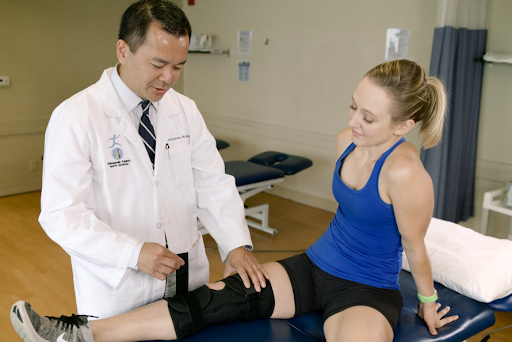
You might also benefit from a brace to help give your kneecap extra support while it heals from the dislocation.
5. Patellar Tendinitis
Tendinitis is what happens when there’s inflammation and irritation to the structure that connects your muscle to your bone.
Patellar tendinitis is a specific type of tendinitis affecting the tendon that connects your kneecap to your shin bone. It can be a source of pain at the front of your knee just under your kneecap.
This condition is common in athletes who jump a lot for their sport, but it’s also possible for other populations to get patellar tendinitis.
The most common activity that contributes to the development of your patellar tendinitis is sudden or excessive physical activity, like:
- running and walking (hills especially)
- jumping
- cycling
Overly tight or weak leg muscles can cause and worsen your patellar tendinitis as it creates greater load for the knee.
It’s important to get assessed by a physiotherapist or other health professional if your pain has been persisting for a long time or if it gets worse.
6. Knee Bursitis
There are small fluid-filled sacs in your knee known as bursae.
Bursae cushion your knee joint and reduce friction between the joint and structures like bones, tendons, muscles, and skin.
Your knee bursae can get inflamed which might make your knee feel tender, swollen, and warm.
Some common causes of knee bursitis include kneeling on your knees for too long, participation in sports where there’s a lot of contact between your knee and another surface, and overuse of the knee in activities such as running.
Knee bursitis can also have a higher chance of developing alongside other conditions like osteoarthritis.
7. Arthritis
Arthritis is one of the leading chronic conditions in Canada. In fact, 1 in 5 people aged 15 years and older have arthritis.
The most common type of arthritis is osteoarthritis, with the knee being a common joint that’s affected.
Knee osteoarthritis is a process where there’s degenerative changes as the cartilage in your knee gets affected by “wear and tear” and age.
Common symptoms of this condition include:
- gradual increase in pain in the knees
- stiffness in the knees especially first thing in the morning
- clicking, creaking, or grinding in the knee
- knee swelling
- difficulty walking and going up/down stairs
Although there’s no treatment for knee osteoarthritis, there are things you can do to keep your symptoms at bay and slow the progression of it.
Your doctor might recommend certain medications and procedures depending on how your knee osteoarthritis presents.
A physiotherapist can also be a part of your arthritis management plan as they can help you increase strength and range of motion in your knees.
Other Causes of Knee Pain
There’s a wide variety of conditions that could’ve created the pain that you feel in your knee.
One of these conditions could be a knee fracture if there’s been a traumatic event to your knee or if you have osteoporosis.
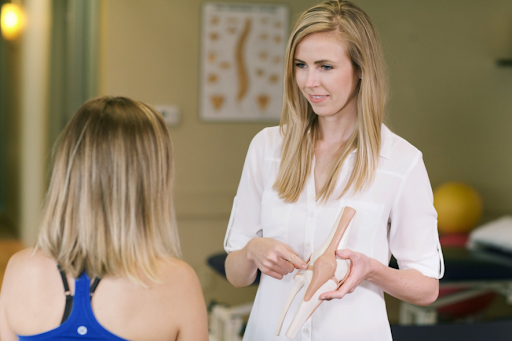
Another condition is patellofemoral pain syndrome, which is a general term used to describe pain around your kneecap due to poor kneecap movement and weakened muscles that control knee movement.
Hip or foot pain could also lead to problems in the knee. This is because your knee could be compensating and doing extra work to spare the painful joints that are above or below your knee.
How Do I Treat My Knee Pain?
If you’re feeling pain in your knees, know that there’s something you can do about it.
A physiotherapist is a health professional that can help you overcome your knee pain.
Physiotherapists specialize in assessing and treating pain in the body.
They are experts in finding the root cause of your pain and creating a specific treatment plan to deal with your pain and prevent it from coming back.
Some treatment methods they might use include:
- Hands-on therapy to help your knee move better
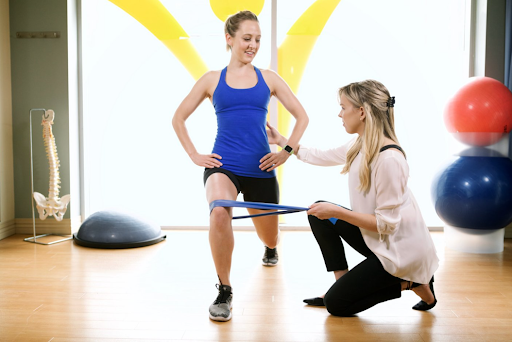
- Exercises to strengthen your knee and increase its mobility
- Suggestions about effective knee bracing options
- Walking and running gait analysis to correct faulty movement patterns
- Modalities for pain management like ice, heat, ultrasound, and laser therapy
…and more!
Get Rid of Your Knee Pain Today!
Don’t let knee pain get you down from doing your everyday activities any longer.
Find immediate relief and overcome your knee pain by booking your physiotherapy appointment today to get assessed and treated by a skilled physiotherapist.
If you’re unsure that physiotherapy is right for you, try a FREE 20-MINUTE PHONE CALL with us to talk about your knee pain and hear advice about your treatment options.
Our physiotherapy team at PhysioPlus Health Group will be happy to help you get back on your feet…pain-free!
This blog was written by Anna Zheng, a Physiotherapy student at the University of Toronto.
Frequently Asked Questions
What knee brace do I need?
Knee bracing may or may not be appropriate for you depending on your specific condition. If appropriate, it can provide you with extra support, pain relief, and help your knee function better. However, if you’re wearing the wrong type of knee brace, there could be further strain and discomfort to your knee. Therefore, it’s important for a healthcare provider to assess your knee condition to give you recommendations on what kind of brace would be appropriate and effective for you and your needs.
Will my knee pain go away on its own?
In some cases, knee pain can go away on its own. Knee pain can also sometimes be managed at home with strategies like rest, icing, compression, and stretches. In other cases, your knee pain can actually get worse if left untreated. An assessment from a healthcare professional is important to steer you on the right path and give you information on how to recover from your specific knee condition
How do I know if I should seek help for my knee?
When you have pain that is not going away with rest, ice and elevation, it may be time to seek medical help by your doctor or physiotherapist. Other signs that you should have your knee examined are when experiencing: inability to bear weight, knee is “giving out”, noticeable difference in your knee’s shape or consistent swelling, or loss of range of motion in your knee.