
Watch this video to learn about Pelvic Floor Physiotherapy at PhysioPlus Health Group


Demetria is amazing, I’ve never felt so relaxed in a medical office setting before and I was super relaxed and I felt safe. My concerns and questions were all heard and answered. Thank you Demetria.
Excellent post partum care. Lauren is knowledgeable and designed an effective and reasonable regimen for me.
First time there – great experience. Easy check in, friendly staff – Lauren R. was super approachable & professional and clearly very knowledgeable and offered lots of great insights, clear on the process and next steps and answered my many questions!
I have had a wonderful experience and improvement in my quality of life after visiting PhysioPlus Health Group for pelvic floor physiotherapy. The PT made me feel comfortable and answered all my questions.
I would like to thank Lauren Rimmer for all her help and support during physio appointments. She assisted me during my first pregnancy with pelvic floor sessions and I could not be more grateful and thankful. Lauren is kind, polite and very professional. I recommended her to all my pregnant friends and I know that they are in great hands!
Registered Physiotherapist
Registered Physiotherapist
Your pelvic floor health is more important than you may think. Pelvic floor issues are SO common but AREN’T NORMAL and CAN be cured. You’ll be relieved to know that ALL of these common symptoms below can be treated with pelvic floor physiotherapy!
Are you one of the many people who suffer from urine leakage when you do activities like coughing, running, sneezing, or jumping?
Have you ever had an “accident” where you couldn’t make it to the bathroom in time?
Are you currently experiencing pain during sexual intercourse?
Do you suffer from chronic pelvic pain?
Have you noticed changes in your body during or after pregnancy?
If you said “YES” to any of these questions, you might have an issue with your pelvic floor.
Pelvic floor physiotherapy, also known as pelvic health physiotherapy, is a subspecialization of physiotherapy that focuses on assessing and treating the pelvic floor and pelvis. A pelvic health physiotherapist has completed post-graduate training and is rostered with the College of Physiotherapists of Ontario to provide this specialized type of care.

You’ve probably heard of the phrase “pelvic floor” before. But what does it exactly mean?
A pelvic floor is a group of pelvic floor muscles that span from your tailbone to your pubic bone.
You can think of the pelvic floor as a muscle “hammock” that supports some of your important internal organs like your bladder, uterus or prostate, and rectum.
Like any muscle in your body, your pelvic floor can be too tight or too weak. When this change happens, you could have symptoms like involuntary loss of urine, pain or discomfort around your pelvic region or low back, and pain with intercourse.
There could be many different factors that might be contributing to your pelvic floor symptoms.
Some factors that could have contributed to your pelvic floor dysfunction include the effects of pregnancy, childbirth, injury, stress, or trauma.
Despite these factors, there are steps you can take to effectively manage and heal your pelvic floor-related symptoms.
Contact us for more information!
The components of a pelvic floor are found in all genders, which means that all genders can experience pelvic floor issues.
The pelvic floor is vulnerable to dysfunction or injury much like any of the muscles in your body, which can lead to some uncomfortable symptoms.
If you relate to one or more of the following statements, you might have an issue related to your pelvic floor
These symptoms are common but NOT normal and can greatly impact your quality of life.
Leaking urine or having sudden uncontrollable urges to go to the bathroom affects about 25-45% of the population.
Although this condition is common, it’s not normal Is It Normal to Leak Urine or Have Sudden Urges to Go? Blog and can be solved with pelvic floor physiotherapy.
Pelvic floor physiotherapy will provide you with effective treatment and tools in order to get rid of your urinary leakage once and for all.
Some of these urinary leakage treatments may include pelvic floor exercises, manual therapy techniques, breathing exercises, and more.
If you’re noticing any urinary leakage after pregnancy, check out some pelvic exercises that you can do to get you back on track!
Your pelvic health concerns are unique, and determining an effective treatment option depends on many different factors like your health history, the cause of the symptoms, and your physical activity level.
During your initial appointment, a pelvic floor physiotherapist will ask you questions and assess you to determine what issues need to be addressed.
After the assessment, the pelvic physiotherapist will explain your condition to you, go over your treatment plan including advice about treatment options. They will let you know the number of visits you may need to effectively treat your pelvic floor condition.
The number of visits will vary from person to person, but the pelvic floor physiotherapist will try their best to help you fix your pelvic floor condition in the least amount of visits possible.
A pelvic floor physiotherapist is a physiotherapist with advanced and specialized training in how to assess and treat conditions related to the pelvic floor and pelvic floor rehabilitation.
Pelvic floor physiotherapists can help with:
At PhysioPlus Health Group. we’re dedicated to answering any questions you have. Contact us to book a complementary 15 minute phone call with a pelvic health physiotherapist and ask us anything.
It can be very helpful to see a pelvic floor physiotherapist both during your pregnancy and after your delivery.
It is recommended to see a pelvic floor physiotherapist early on during your pregnancy in order to reduce your likelihood of pain, incontinence, abdominal separation, and tearing as well as to improve your birthing process and postpartum recovery.
Our pelvic floor physiotherapists will provide you with education and at home tips and tricks in order to help you feel more comfortable throughout your pregnancy and more prepared for your labour and delivery.
After your baby is born, our pelvic floor physiotherapists can help with symptoms of pain, incontinence, and prolapse. We offer C-section scar massage, treatment to help with diastasis recti, education and safe exercises to do at home.
There’s many other topics that pelvic floor physiotherapists can address prenatally or postpartum, you can learn more on our prenatal/postnatal treatment page. If you have any questions, please book a complimentary consultation, and we’d be happy to try and help.
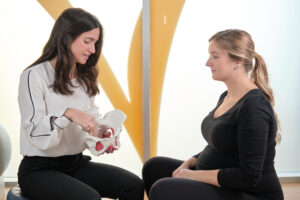
At your initial appointment, the pelvic floor physiotherapist should take a detailed and thorough history of your condition.
You can expect them to ask you questions about your symptoms, the severity of the symptoms, and when it started.
Because many other factors can be influencing your pelvic floor symptoms, they may also ask you questions related to your general health, your daily activity, your sleep, and more.
The pelvic floor physiotherapist should make you feel comfortable during this assessment. You can opt out of answering any questions or participating in any of the components of the physical exam.
After the discussion, they will assess you and explain what they are looking for during the assessment.
During an internal exam, you will be asked to undress your bottom half and lie on your back. The pelvic floor physiotherapist will use gloves and assess structures in and around your pelvic floor.
Externally, the pelvic floor physiotherapist may look at structures that could be influenced by the pelvic floor like your back and your hips.
They may also ask you to do a variety of movements to assess pelvic floor muscle function to see how well your pelvic floor is working.
After your assessment, your pelvic floor physiotherapist will talk to you about their findings, what’s causing your problem and how to fix it. They‘ll create an individualized treatment plan explaining the best treatment options to address your specific problems. Pelvic floor physiotherapists will use a combination of treatments such as:
An internal exam allows the physiotherapist to properly assess and treat the structures of the pelvic floor that cannot be palpated externally. If, however, you are not comfortable with an internal exam let your physiotherapist know and they can assess and treat your pelvic floor externally.
There are many physiotherapy clinics that offer pelvic floor physiotherapy.
At Physio Plus Health Group we have several pelvic floor physiotherapists that are highly trained and knowledgeable about different pelvic floor conditions.
Most importantly, our pelvic floor physiotherapists will help you find the root of your pelvic floor problem and solve it, so you can get back to doing the activities you love to do.
If you or a loved one are struggling with pelvic pain, you may benefit from pelvic floor therapy.
Book your first appointment today at our clinic located in Bloor West Village and the Kingsway to start feeling better, sooner. We will be happy to help you and can’t wait to be a part of your health journey.
The pelvic floor is important because it plays a large role in some important functions of your life. Here are the top 6 functions that the pelvic floor helps with:
Choosing a pelvic health physiotherapist is a big decision. Here are some important things to look for when choosing a pelvic floor physiotherapist:
At PhysioPlus Health Group. we’re dedicated to answering any questions you have.
The goal of pelvic floor physiotherapy is to provide you with both short and long-term relief to your symptoms so that you can get back to doing the things you love to do.
Pelvic floor physiotherapy may involve activities like stretching or exercise, which can cause some muscle tightness or soreness.
These feelings are normal, and the discomfort will start to decrease as your body gets used to this kind of activity.
Our number one priority is your safety, so please let us know if anything needs to be changed or addressed during treatment.
We will be happy to accommodate to any of your needs and work together with you to create an effective treatment plan.
Choosing the right physiotherapist can be a big decision. We’re dedicated to answering any questions you have to help you make the best choice. Contact us today and ask us anything!
(416) 760-8280Worried about falls or safety in your home?
Our In-Home Safety Assessment can help you find simple ways to stay safe and independent as you age.