
Pilates: Improving your deep core activation and strength TODAY!
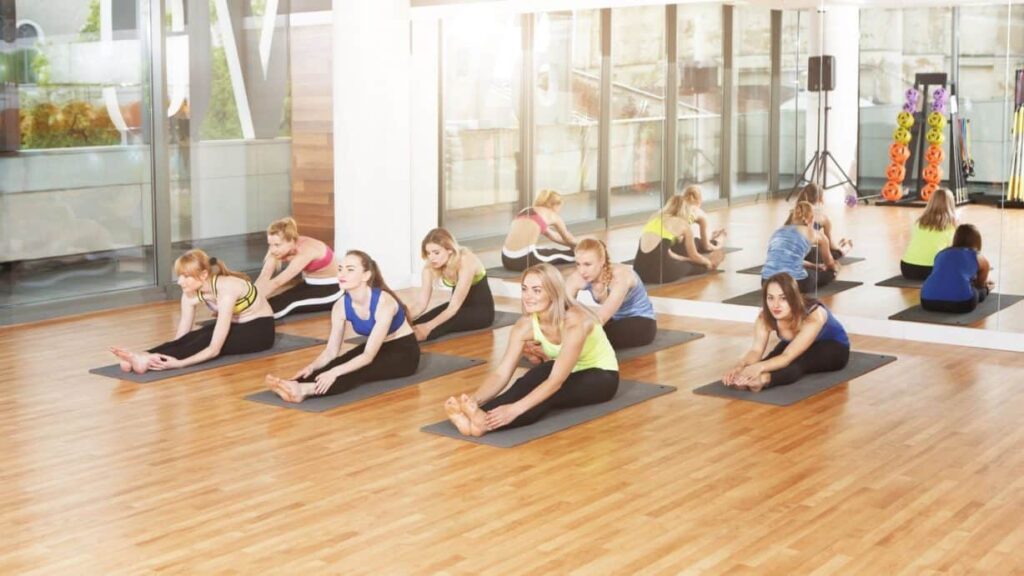

If you’re looking for a practice that can help with feeling your deep core muscles, Pilates is for you!
Pilates is proven to help help with low back pain and create general overall body awareness! It will help you learn about your optimal posture, and how your body moves and works. Not to mention you’ll also feel more connected to your body; how amazing is that!
Pilates and Deep Core Activation
You will hear the term ‘deep core muscles’ a lot in a Pilates class or session. When we talk about activating our deep core muscles, we mainly talk about the engagement of a muscle called Transversus Abdominus, or TA for short. Your TA is a local stabilizer muscle whose jobs is to control motion and neutral joint position.
Contraction of muscles such as the TA produces little or no motion or movement of the body. But, they are super important for awareness and stability in the body.
Once the patient learns to activate TA, (along with it the Pelvic Floor, and Multifidus, which is located at the back of the body, working together with the TA to stabilize), we can move on to practice recruiting it in many different positions and exercises: which will include laying on your back and front, standing, squatting, lifting, etc.
Pilates and Breathing
Breath is also a very important component of Pilates. Breathing couples with muscle awareness are the main ways we can activate our TA. There’s a reason why Pilates is also called ‘mindful movement’.
Breathing is deeply tied to deep core activation! Check out the post below to see how you can assess your breathing pattern!
Pilates Positions
There are two ways in Pilates to find your deep core; either through a neutral placement of the pelvis, or in an imprinted placement of the pelvis. Try to work in neutral first, to see if the connection can be made. If this is not working, then move to an imprinted position.
Pilates positions – Explained
Neutral Placement: Maintains the natural curve of the lower back. This is the most stable and optimal shock-absorbing position for your back. Your pelvis should be in a comfortable position, no ‘intentional arching’. We work in Neutral mostly during Closed Kinetic Chain exercises, meaning that either the legs or arms are on the mat.
Imprinted Position: The lower back is gently moving toward the mat. Avoid pressing your lower back all the way into the floor, or tilting the pelvis too far by overusing the abs or glutes. The space between the lower back and the mat is different for everyone, so we always look at the body as whole, rather than only at the pelvic area. We work mainly in an imprinted position during Open Kinetic Chain, or exercises when legs AND arms are lifted off the mat.
Finding you Inner Core
Try these Pilates cues, help you ‘find the TA muscle’ and activate it properly:
- Lie on your back in a neutral posture/pelvis, (gentle curve in your low back). Breathe in to prepare. Imagine a string that connects the inside of your two front bones.
- Exhale the breath through a gently pursed lip (like you’re trying to blow out a candle) and think about connecting the muscle along this line, as if you’re tying the string together at the centre of your belly.
- Gently contract your pelvic floor by drawing the muscles from behind your pubic bone to your tail bone and the left and right sides of your pelvic floor together, the sensation is that you can pick up a tissue with your pelvic floor.
- Inhale, release everything slightly, and then on the next exhale, contract again. Repeat 4 -8 times.
Want to learn more about Pilates?
If you would like to learn more about Pilates at PhysioPlus, click here!
Or, to book a session with our Pilates Instructor Pari, click here!