"I am now pain free and building strength in order to avoid future problems!"
I have been coming to Physioplus for years with back and hip issues. I have always received excellent care and advice. Currently I see Michelle De Marchi occasionally and Monica Soderstrom for weekly Pilates instruction. I can’t thank them both enough for the excellent care I have received. After 9 months of hip pain, I am now pain free and building strength…
- Patricia S.
Pilates for Core Strength, Fitness and Sports Performance
Pilates is a holistic approach to increasing core strength, improving posture, relieving stress, reducing risk of injuries and promoting overall fitness and wellness. Our Pilates programs cater to all levels and activity levels, from beginners to advanced practitioners, athletes to non-athletes.
Whether you’re chasing fitness goals or seeking a balanced, active lifestyle, Pilates offers unparalleled benefits. No matter your level of activity, you’ll benefit from enhanced core strength, flexibility, and injury prevention, optimizing your movement and performance in any sport.
Join us today to experience increased vitality, resilience, and a body that feels stronger and more agile.
Pilates, developed by Joseph Pilates in the early 20th century, has a rich history rooted in physical fitness and rehabilitation. Born in Germany in 1883, Joseph Pilates overcame health challenges through rigorous exercise. He synthesized various fitness techniques and created a method that focused on core strength, flexibility, and balance. During World War I, he worked with injured soldiers, refining his system and inventing equipment like the Reformer. In the 1920s, he emigrated to the United States, establishing his studio in New York City. Over the decades, Pilates gained popularity, becoming a staple in the fitness industry, with millions worldwide benefiting from its holistic approach to wellness. Today, Pilates remains a respected discipline for both fitness enthusiasts and individuals seeking rehabilitation.
Yes, Pilates helps with core strength. The core musculature, including the abdominal muscles, back, and pelvic floor, are engaged and strengthened during Pilates exercises. These exercises target the deep muscles of the core, which provide core stability and support to the spine and pelvis.
By consistently practicing Pilates, you can develop a strong and stable core, which can improve overall strength, flexibility, balance, and alignment. It can also enhance your functional performance in other physical activities and reduce your risk of injury.
Having a stronger core is beneficial for several reasons. First, a strong core helps to improve posture and balance, reducing the risk of falls and injuries. A strong core also supports and stabilizes the lumbar spine, reducing the risk of back pain and improving overall spinal health.
A strong core enhances athletic performance by providing a solid foundation for movements and increasing power and efficiency. It also improves functional movements in daily activities, such as lifting and bending, making them easier and more efficient.
Overall, having a stronger core not only improves physical health and performance but also can help to reduce your risk of injury and enhance overall well-being and quality of life.
Pilates can definitely improve athletic performance. Pilates focuses on core strength, flexibility, and balance, which are all essential components for athletes in various sports.
By focusing in core training athletes can improve their stability and control, leading to better overall body alignment and posture. This can result in enhanced coordination and efficiency of movement, which is crucial for athletic activities.
Pilates exercises can help improve flexibility, which can enhance range of motion, rotational movements and help prevent injuries. The controlled and precise movements performed in Pilates can also improve body awareness and concentration, which are vital for athletes to perform at their best.
Overall, incorporating Pilates into an athlete’s training program can have numerous benefits and contribute to improved athletic performance.
Pilates is a form of exercise that focuses on strengthening the core musculature, improving flexibility, and promoting overall body alignment and posture. While Pilates can benefit individuals in various sports, there are some sports in particular that can greatly benefit from incorporating Pilates into their training.
Sports such as gymnastics, dance, figure skating as well as hockey require a high level of balance, control, and flexibility, all of which can be improved through Pilates. Additionally, sports that involve repetitive movements or asymmetrical muscle development, such as golf or tennis, can benefit from the symmetrical and balanced muscle development that Pilates provides.
Pilates will give you different benefits than what a typical gym workout with strength training or resistance training will give you. It focuses on building strong core muscles and improving flexibility, which can lead to improved posture, reduced risk of injury, and better overall body alignment.
Pilates exercises are low impact and can be modified to suit individual needs and abilities. It emphasizes strengthening your muscles using mindful movement and proper breathing techniques, so you learn to move with better mechanics and reduce strain on your muscles and joints. With Pilates, there is also a wide variety of exercises and equipment available.
Incorporating Pilates into your routine it can help you get greater gains with your gym workout by strengthening the deeper stabilizing muscles of your core, neck shoulder blades, hips and back.
If you’re not sure how to incorporate this into your routine, or have questions about what type of exercise you should be doing, contact us for a complementary consultation where you can speak to a physiotherapist or pilates instructors and ask any questions you have.
Pilates can be a great supplement to overall fitness and exercise routine, but it is unlikely to completely replace traditional forms of exercise. While Pilates focuses on core muscular strength, flexibility, and entire body awareness, it may not provide the same cardiovascular benefits as exercises like running or cycling.
Pilates may not target all muscle groups in the same way that a well-rounded exercise routine would. It is important to incorporate a variety of exercises and activities to ensure overall fitness and to meet individual goals.
Pilates is considered to be highly effective due to its unique focus on strengthening and stabilizing the core muscles and by developing optimal core strength. By targeting the deep muscles of the abdomen, back, and pelvic floor, Pilates helps improve posture, balance, and overall body alignment.
The controlled and precise movements performed in Pilates also help in developing long, lean muscles, improving flexibility and joint mobility. It emphasizes the mind-body connection, encouraging you to focus on breath control and mindfulness during the exercises.
This approach not only enhances physical strength and flexibility but also promotes mental clarity, relaxation, and stress reduction. The combination of these factors makes Pilates a highly effective exercise method for improving overall fitness, strength and well-being.
Both Pilates and yoga can be beneficial, but the choice between the two ultimately depends on your specific needs and goals. Pilates focuses on strengthening the core muscles, improving posture, and enhancing flexibility, which can help to increase stability and reduce your the risk of injury.
On the other hand, yoga emphasizes flexibility, balance, and mindfulness, which can be beneficial for in terms of improving body awareness, reducing stress, and enhancing mental focus. Ultimately, the decision between Pilates and yoga should be based on their specific training needs and personal preferences.
If you’re not sure which you would benefit from more, one of our physiotherapists can help you determine which approach is right for you.
Pilates is considered beneficial for athletes due to its focus on core strength, flexibility, and overall body alignment. It helps athletes improve their physical performance by enhancing their stability and balance, which are crucial for maintaining proper form and preventing injuries.
Pilates exercises also target deep stabilizing muscles that are often overlooked in traditional training methods, helping athletes develop better body awareness and control. Moreover, Pilates can aid in correcting muscular imbalances and asymmetries, which can arise from repetitive sports-specific movements.
By addressing these imbalances, athletes can enhance their overall performance and reduce the risk of overuse injuries. Additionally, Pilates promotes mental focus and concentration, allowing athletes to improve their mind-body connection, which is essential for optimal performance in sports.
Pilates is good for non-athletes because it offers a low-impact and gentle form of exercise that can be tailored to individual needs and abilities. Unlike high-intensity workouts or competitive sports, Pilates focuses on controlled movements and proper alignment, making it accessible and safe for people of all fitness levels.
This form of exercise helps improve overall strength, flexibility, and posture, making it particularly beneficial for individuals who spend long hours sitting or working in sedentary positions.
Pilates also emphasizes the importance of breath control and mindfulness, promoting stress reduction and mental well-being. Its versatility and adaptability make Pilates a great choice for non-athletes looking to improve their overall fitness and enhance their quality of life.
The frequency at which you should do Pilates varies depending on your individual needs and goals. Pilates can help you achieve a powerful core, flexibility, balance, and posture, all of which are beneficial for individuals in reducing the risk of injuries and enhancing athletic performance.
Pilates is an effective and beneficial form of exercise for both athletes and non-athletes alike. It helps improve overall strength, flexibility, balance, posture, and mental focus while providing a low-impact and gentle way to exercise.
It can be done 1-3 times per week depending on your specific needs and goals.
WHAT’S THE CONNECTION BETWEEN PILATES AND FUNCTIONAL MOVEMENTS?
Pilates exercises often involve movements that integrate your core muscle function with other muscle groups to help promote proper body mechanics and improve your functional movements. Pilates exercises focus on engaging the core muscles, improving posture, and enhancing body alignment, which are essential for performing functional movements effectively and efficiently.
By practicing Pilates, individuals can develop the necessary strength and stability in their core muscles to support day-to-day functional movements and prevent injuries.
WHAT THE RELATIONSHIP BETWEEN PILATES AND PHYSIOTHERAPY?
At PhysioPlus Health Group, we often use Pilates as a treatment option for several different conditions, including the following:
Back Pain
Prenatal and postpartum aches and pains, core weakness
Post-surgical recovery
Shoulder and neck pain
Spinal injury and surgery recovery
Scoliosis
Knee and hip pain
Arthritis
But Pilates is beneficial for more than just injury rehabilitation. It’s a great way to strengthen your muscles, improve postural alignment, and improve muscle performance and motor control.
At PhysioPlus Health Group, our Pilates instructors are not only trained in fitness pilates, but also in Physio (or Clinical) Pilates. This means that we not only treat your specific area of pain, but we also help you reach your full potential for physical function. Depending on the nature of your injury and your goals, Pilates can be helpful in improving your strength, posture and balance, allowing you to move with greater ease and less risk of injury or re-injury.
PhysioPlus now offers the convenience of IN-Home Physio-Pilates for patients who can’t make it into our clinic. You can now receive the personal care you need in the comfort of your own home from our Registered Physiotherapists and Physio-Pilates Instructors.
Enjoy the convenience of flexible scheduling, less travel, and increased privacy while still receiving top-notch treatment.
Whether you’re recovering from an injury, trying to manage a chronic condition, or simply trying to optimize your health and wellness, our PhysioPlus therapists can give you exceptional results with incredible convenience.
If you are searching for a Pilates program in Bloor West Village and The Kingsway, your search can end here. Contact us today to book an appointment.
Or you can ask us about setting up a complimentary 15-minute consultation where you can talk to one of our Pilates instructors, ask questions and get honest treatment advice.
Do I need equipment for in-home physiotherapy or pilates?
Our in-home physiotherapy and pilates therapist will bring all the equipment necessary for your appointment and follow-up visits. So no need to worry about purchasing any equipment or tools. Our therapists are also very good about finding items within your home that can double as therapy tools if needed.
If you do own a few therapy tools and aids such as therapy balls or bands, you can let our therapist know during the first visit as they may want to incorporate them into your home exercise program
What does Pilates do that other types of exercise don’t?
Pilates distinguishes itself from other forms of exercise through its core-centric approach, emphasizing a mind-body connection and whole-body conditioning. Unlike traditional workouts, Pilates targets deep core muscles, fostering better posture and spinal alignment. Combining strength, flexibility, and balance, Pilates provides a comprehensive fitness regimen that reduces the risk of injury and improves overall physical function. The low-impact nature of Pilates is particularly beneficial, making it suitable for individuals of all fitness levels and a valuable tool in rehabilitation. Additionally, the use of specialized equipment enhances resistance and support, allowing for varied workouts tailored to individual needs and goals.
What is a typical private Pilates session like?
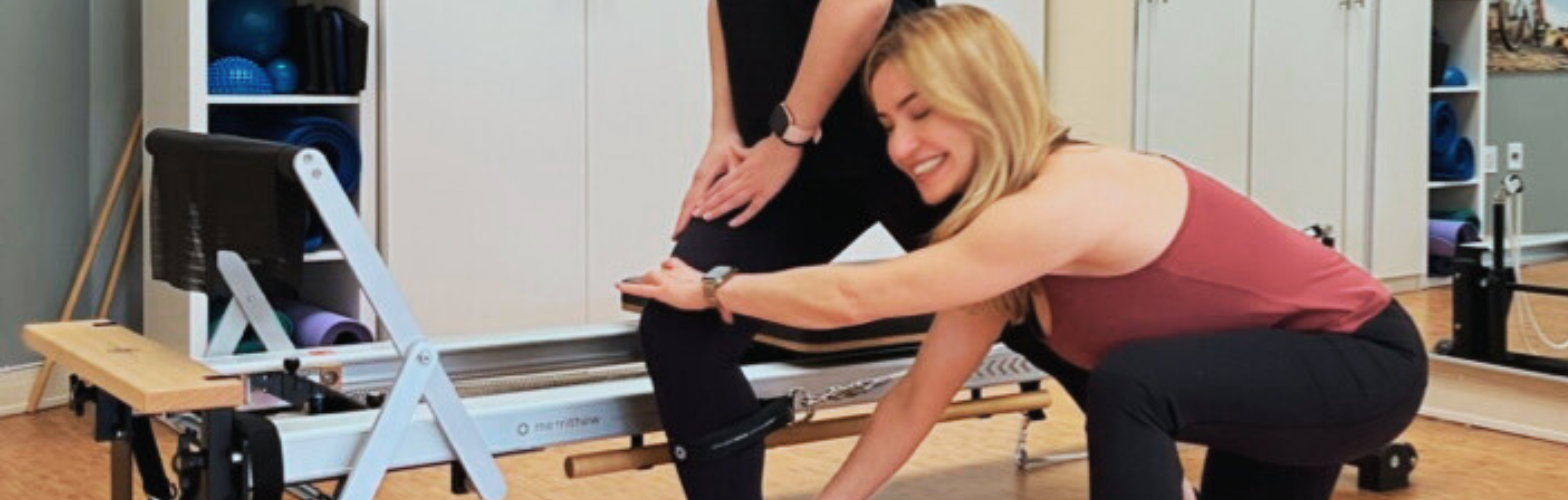
In a Pilates private session, our certified Pilates instructors provides personalized guidance tailored to the individual's specific fitness goals and needs. The session typically begins with a discussion about the client's objectives and any physical limitations. The instructor then leads the client through a series of Pilates exercises, often utilizing specialized equipment such as the Reformer or Cadillac. These exercises focus on core strength, flexibility, and posture, with the instructor providing hands-on adjustments and cues for proper form. The session encourages a mind-body connection and allows for a highly customized and intensive Pilates experience.