
How to Deal with Sciatica During Your Pregnancy


Growing a baby comes with all sorts of aches, pains, and other uncomfortable symptoms as your body changes.
It’s not uncommon for people who are expecting to be experiencing pain in their lower back or glutes.
In some cases, this condition is known as sciatica.
This is a situation where your sciatic nerve, which comes from your lower spine, gets irritated and causes pain or discomfort in your lower back.
The symptoms that you feel can radiate into your glutes, behind your legs, and down into your feet.
People commonly describe the feeling of sciatica as a pins and needles type of discomfort, as numbness, as an electronic shock feeling, as burning, as tingling, or as radiating pain.
These symptoms can be constant, come and go randomly, or come on during certain activities.
Your discomfort might be so severe that you have trouble walking, sitting or standing for a long period of time, sleeping, working, or doing your regular chores around the house.
This type of discomfort is bothersome and is something that you probably want to get rid of AS SOON AS POSSIBLE.
There are some at-home treatments that you can try to temporarily ease your sciatica.
However, physiotherapy can help you FIX your sciatica and GET RID OF YOUR PAIN.
Before we go into how sciatica during pregnancy is fixed, you should understand the causes of it first.

What Causes Sciatica During Pregnancy?
Sciatica begins from the sciatic nerve being compressed in some way. This compression irritates your sciatic nerve which causes symptoms in your lower back and other areas below.
There are a few conditions and factors that could have led to your sciatica getting compressed during your pregnancy.
Some of these reasons could include:
- Increased muscle tension from a muscle in your glutes known as the piriformis can compress the nerve, as this muscle runs right on top of your sciatic nerve.
- Pregnancy hormones, specifically a hormone known as relaxin, cause your ligaments to stretch to accommodate your baby during labour. When your ligaments are looser, there can be shifts in where certain structures like your bones and muscles are, which can press on the sciatic nerve.
- Your baby’s weight or position can cause extra pressure on your back, pelvis, and hip joints which contributes to pressure on the sciatic nerve.
- A bone overgrowth, which is also known as known as a bone spur, on your vertebra can compress and pinch your sciatic nerve, leading to discomfort.
- A herniated, bulging, or slipped disc can press on the nerve and make it so you’re getting pain and extra pressure on your back and its surrounding structures.
It’s important for a professional like your doctor or your physiotherapist to identify the root cause of your sciatica so it can be quickly and effectively treated.
What Can I Do to Relieve Sciatic Pain During Pregnancy?
Here are a few things that you can try to get some relief from your sciatic pain.
1. Use a Warm Compress
A warm compress on the spots that you feel the most pain like your lower back or glutes can help soothe the painful area. It’s recommended that the warm compress is not too hot. Apply the warm compress for 15 minutes or as tolerated. Try using a towel between the warm compress and your skin to reduce the chances of skin irritation.
2. Avoid Sitting for a Long Time
Depending on what your daily schedule looks like, you might spend a lot of the time sitting. Your sciatic nerve can get aggravated when you’re in a sitting position for too long. It’s important to break up your sitting time with a short walk or light stretching for at least 1 minute after every 20 minutes of sitting.
3. Get Moving
There are some forms of exercise that can make your sciatica feel better. Swimming is a great choice because being in the water can take away some of the pressure on your spine. In addition, walking is another great activity to ease sciatic nerve pain and release feel-good hormones known as endorphins. Just make sure that you’re walking with good posture, and that you walk for a duration of time that doesn’t aggravate your symptoms. Core exercises can also be effective in strengthening your abdominals and improving your posture during pregnancy.
View this post on Instagram
4. Get Stretching
Some stretches can stretch out and release the tight muscles that could be contributing to your sciatica. A few examples of stretches you can try out include Child’s Pose, Cobra Stretch, Pigeon Pose, and a Standing Hamstring Stretch.

5. Refine Your Sleep
Sometimes, your sciatica can flare up and disrupt a good night’s sleep. To get better sleep, try to find a comfortable position. Usually, people with sciatica find relief when they lie on the side of their body that doesn’t have pain. In addition, make sure that you have a comfortable and firm mattress. Another tip is to make sure that your body is supported during the night. You can try to use a pregnancy pillow or full body pillow to support your back, hips, and legs.
6. See a Physiotherapist
A physiotherapist can assess your sciatica, find the root cause of it, and create an effective treatment plan to solve your sciatic nerve pain.
How Can Physiotherapy Help with Sciatica During Pregnancy?
Physiotherapists are trained to diagnose and solve conditions relating to your nerves, muscles, bones, and muscles.
Some physiotherapists, known as pelvic floor physiotherapists, are trained in all of the above but actually specialize in treating pain and other conditions in pregnant and post-natal folks.
On your first visit, a physiotherapist will gather as much information as possible from you and ask questions to figure out why you are having sciatic pain.
They will then perform a thorough physical assessment to see how your body moves. In this assessment, they’ll look at things like your range of motion, your strength, your posture, and how you move.
After the physiotherapist is finished with their assessment, they will give you a treatment plan that addresses and solves your specific issues.
What is the Physiotherapy Treatment for Sciatica?
There’s a wide variety of treatments that a physiotherapist can do to help you solve your sciatica.
Your treatment plan will be safe for you during your pregnancy. Additionally, your physiotherapist will work together with your physician to ensure that the treatment plan fits your individual health needs.
Your sciatica treatment plan might include nerve flossing, which is a way to get your nerve moving more freely and to reduce the tension on it.
Your physiotherapist also might give you some stretches to reduce muscle tension to get rid of compression on the sciatic nerve.
In addition, your physiotherapist might help you work on your posture and activate your abdominal muscles so that your spine is in a position that doesn’t irritate your sciatic nerve.
Your physiotherapist will also advise you on things you can do to modify your activities to make them pain-free.
This might include advice on your best sleep position, recommendations on how to lift things properly, and guidance on how to do exercise without aggravating your symptoms.
Speaking of exercise, your physiotherapist will also give you an at-home exercise program consisting of things like stretching and strengthening activities to make your sciatica feel better.
Your physiotherapist might also include treatment like massage therapy, ultrasound therapy, heat therapy, or electric therapy to help reduce your pain, improve your blood circulation, and make a better environment for your sciatica to heal.
The overall goal of the treatment plan is to make sure everything is working better to reduce your sciatica symptoms and get you back to where you want to be.
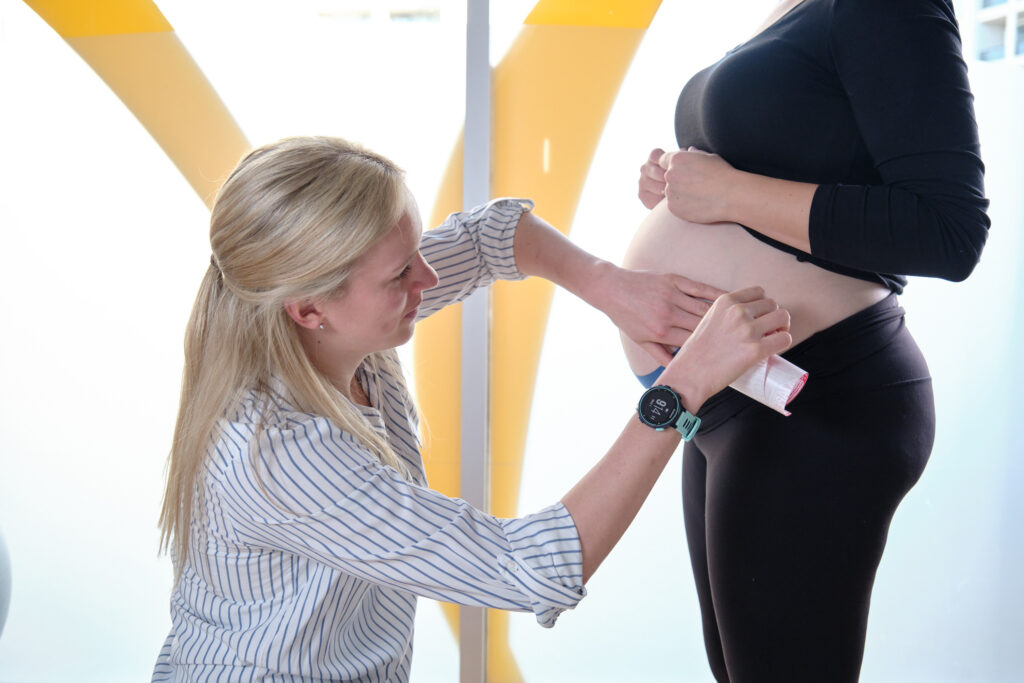
I’m Ready to See a Physiotherapist to Get Rid of My Sciatica!
Ready to get your sciatica under control? You can book online now or call our clinic to request your first physiotherapy appointment.
We have an expert team of physiotherapists and pelvic floor physiotherapists who helped many people overcome their pain once and for all.
It’s time you put yourself first and put an end to your sciatica.
Let’s help you get back on your feet and make sure you feel your best during your pregnancy journey.
This blog was written by Anna Zheng, a Physiotherapy Resident
Frequently Asked Questions
What should I wear to my first physiotherapy appointment for sciatica?
Try to wear loose comfortable clothing that makes it easy for the physiotherapist to assess your problem area. On the top, try to wear a tank top, t-shirt, or athletic long sleeve so that you’re comfortable moving around. On the bottom, try to wear shorts or athletic pants that can be rolled up above your knees so that it’s easy for the physiotherapist to take a look at any areas of pain.
Is physiotherapy for sciatica covered by OHIP?
Physiotherapy for sciatica during pregnancy is NOT covered by OHIP. However, many health insurance plans cover all or some portion of physiotherapy services. Please contact your insurance company directly to get specific details about your physiotherapy coverage. Note that Physio Plus Health Group directly bills many major insurance companies to make payment easy for you! If you have further questions about any of our services, please give us a call at (437) 747-6236.