
The Best 4 Stretches to Manage Your Sciatica

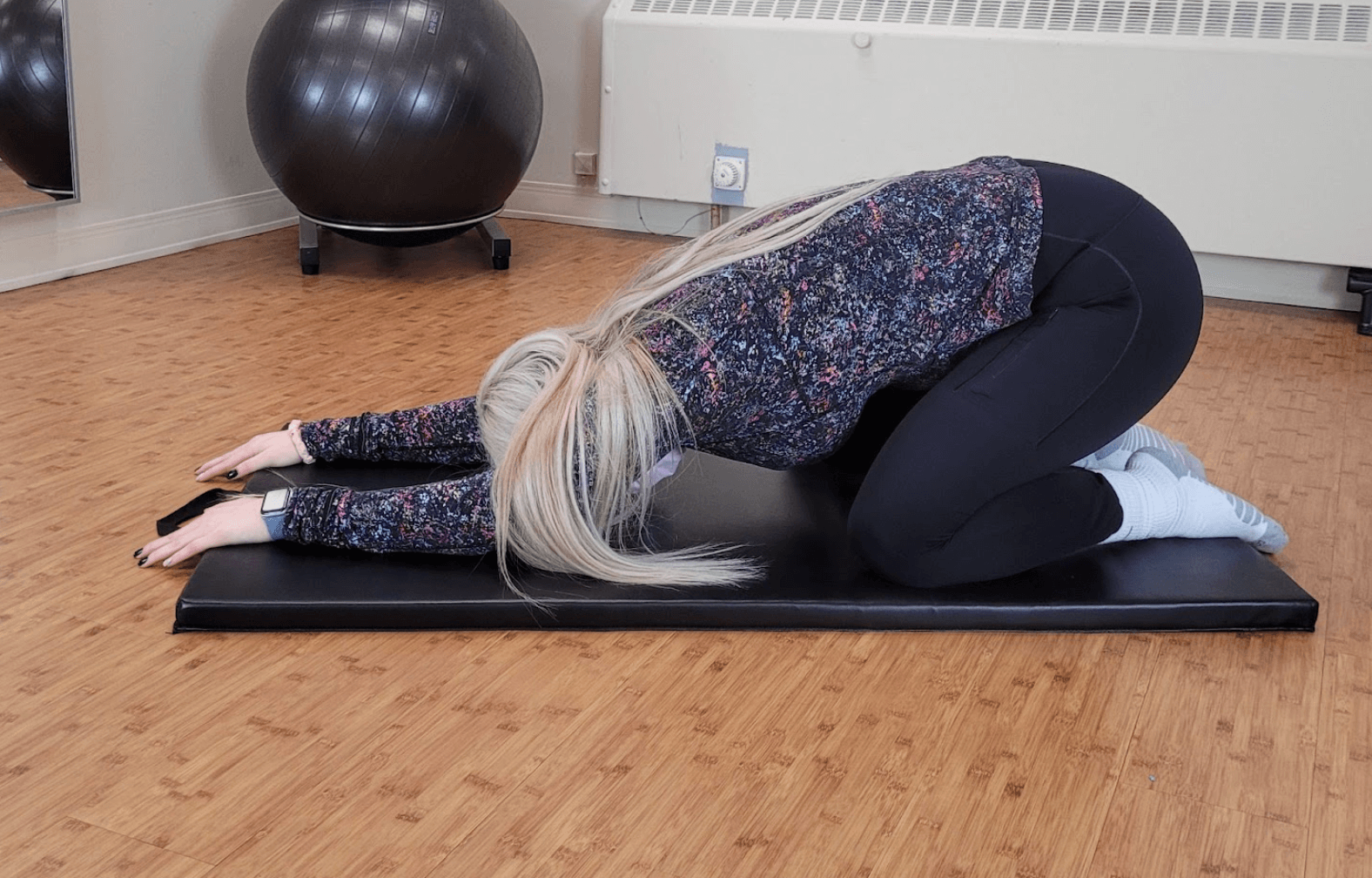
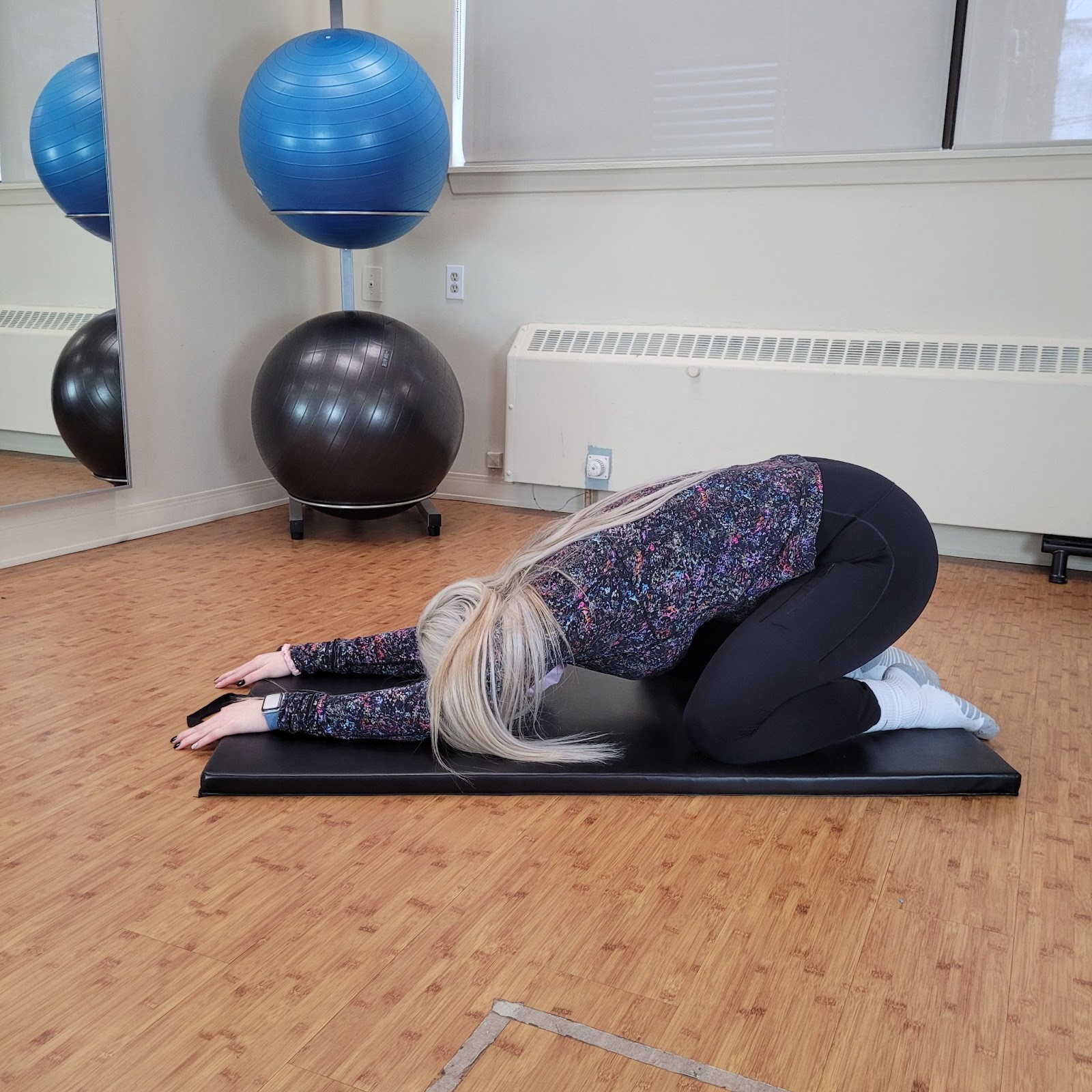
1. Child’s Pose
Contrary to the name, Child’s Pose can be done by people of all ages to stretch their spine and relax their body.
This stretch should be done on a flat surface. You can place a yoga mat or pillow between your body and the floor if you need more support and cushioning.
Step 1: Start on your hands and knees in a table position. Make sure that your wrists are stacked under your shoulders and your knees are stacked under your hips.
Step 2: Let your hips and glutes come down and back so you’re sitting on your heels.
Step 3: Reach out and extend both your arms straight in front of you. Then, allow your head and torso to relax in this downward position.
Step 4: Now, focus on deep breathing in and out at a slow pace. Hold this pose for one minute to get the relaxation and stretching benefits.
Alt text: two women performing child’s pose outdoors
2. Cobra Pose
Cobra pose can be a great way to stretch out your lower back and reduce the compression in your spine so that your sciatic nerve is less irritated.
Step 1: To start this stretch, lie on your stomach with your hands beside your body and your fingertips where your armpits are.
Step 2: Make sure that your elbows are tucked in at your side and not flared out.
Step 3: Take a deep breath in and lift your head, shoulders, and chest off the floor. If it’s not uncomfortable, try to lift more of your torso off the floor so that your stomach is off the floor. Be sure that your hips remain in contact with the floor.
Step 4: Breathe out and slowly lower yourself back onto the floor.
Step 5: You can repeat this stretch for ten cycles to get the best benefits.

Alt text: older woman performing a cobra stretch in a green space
3. Pigeon Pose
This stretch works to stretch your hips and glutes to relieve muscle tension that might be contributing to your sciatic pain.
Step 1: Start on your hands and knees in a table position. Make sure that your wrists are stacked under your shoulders and your knees are stacked under your hips.
Step 2: Take your right knee and place it in front of you with your outside thigh and shin touching the ground.
Step 3: Move your left leg so that it’s straight and directly behind you.
Step 4: Now, sit up straight and use your arms to support you. If you’re able to, lean your body forward to put more pressure on your right hip and glute and get a deeper stretch.
Step 5: Take deep and slow inhales and exhales in this position. Aim for ten breaths and switch over to the other side.

Alt text: woman performing pigeon stretch indoors
4. Standing Hamstring Stretch
Your sciatica could be flaring up because the muscles in the back of your thighs, known as your hamstrings, can influence tightness and pain in your lower back. With this stretch, you can decrease this lower back tightness which reduces stress on the sciatic nerve.
Step 1: To start, stand tall and face an elevated surface. This could be something like a low table, a flight of stairs, a sofa, or a chair. Just be sure that this surface is below the height of your hips.
Step 2: Lift your affected leg and rest the heel of that foot on the elevated surface. Your knee should be straight but not fully locked out in this position.
Step 3: Now, bend forward at your hips while keeping your back straight and chest up. Only go forward until you can feel a slight stretch in the back of your thigh.
Step 4: Hold this stretch for 30 seconds to feel the full benefits. Make sure you’re breathing throughout!
Step 5: Repeat this stretch on your other leg. You should do this stretch three times on each side to decrease hamstring tightness.

Alt text: man performing a standing hamstring stretch outdoors
It’s important to remember that each person is different, so only a licensed physiotherapist can assess you and give you specific treatment advice on what to do to manage your specific sciatic issue.
Please stop the stretches if you feel more pain or discomfort. Reach out to a health professional if you need further help.