

TOP 4 STRETCHES YOU SHOULD DO DAILY

Cat/Cow
The first stretch on this list is one of the most well-known stretches and it’s also one of the easiest stretches to do. This stretch has many benefits for your spine.
You’re most likely sitting at the desk in a slouched posture to do work or lying down on the sofa while watching TV for prolonged periods of time. This is not ideal, as our spines are meant to move in all different directions all the time!
By doing this stretch, you can relieve the stiffness in your entire back by opening up your spine along with activating your core muscles which help support your spine.

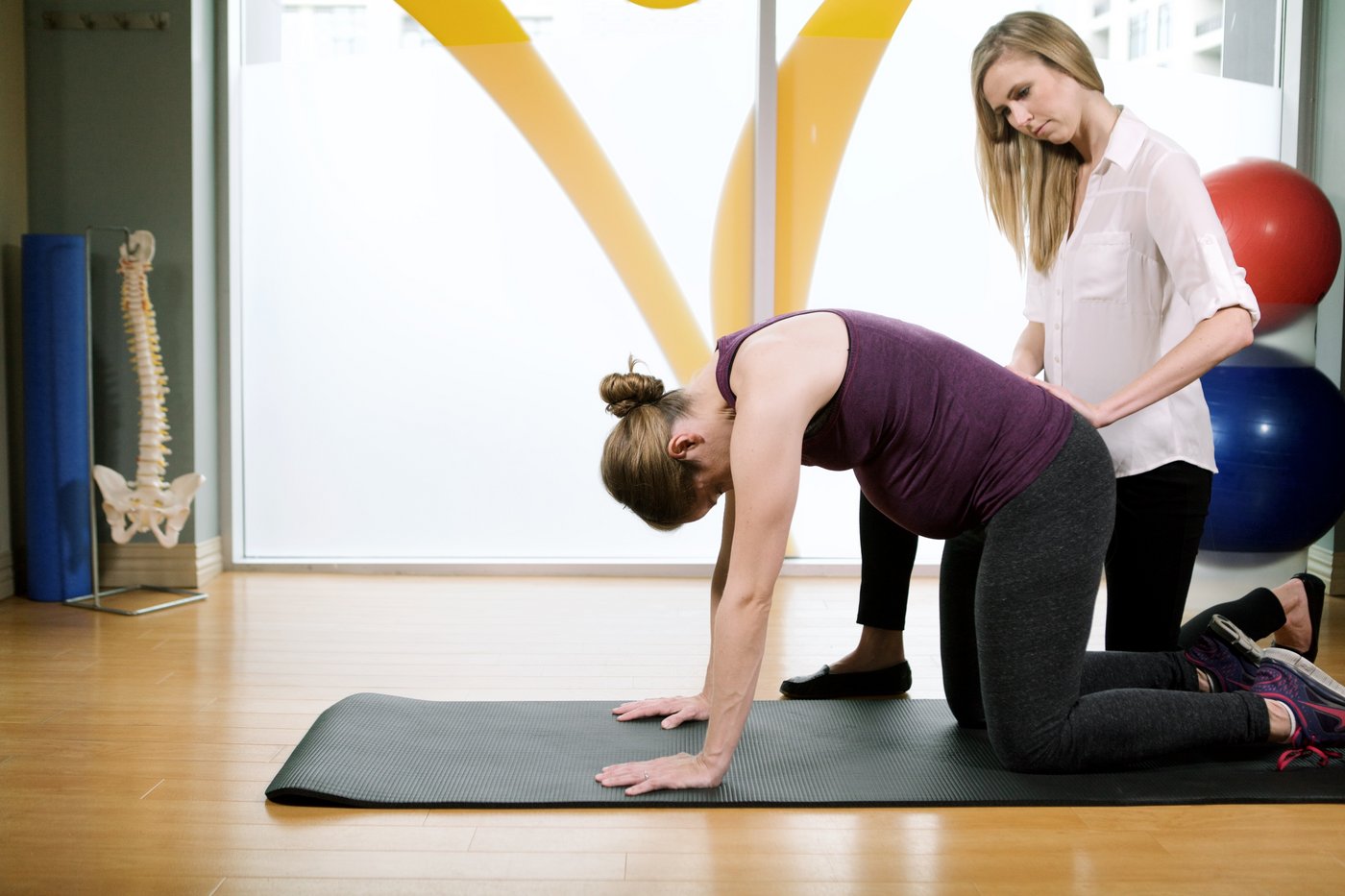
How to do the cat-cow stretch:
- Get on all fours with your hands under your shoulders and knees under your hips.
- Curve the middle of your back towards the ground, as you bring your head and tailbone toward the ceiling. As you do this, keep the movement slow and controlled and take a slow and deep breath in. Hold this position for 1-2 seconds.
- Slowly reverse this movement, by bringing your mid back towards the ceiling and tucking your chin and tailbone down into your body. Again, do this slowly but this time exhale all the way air out. Hold this position for 1-2 seconds.
- Research by the famous Dr. Stuart McGill who has devoted his life to back pain suggests that repeating this movement for about 7-8 controlled cycles is most optimal for a healthy spine.
Kneeling Psoas Stretch

The daily movements you typically perform are like to be forwards and backward. For example, you probably need to stretch up to reach the top cupboard or bend forward to pick something up off the floor.
However, it is highly likely that you rarely, if ever, participate in sideways movements and as you probably recall, your spine is meant to move in many different directions! This can result in the muscle on the side of your knee, thighs, hips, abs, and back to get both weak and tight.
For this reason, physiotherapists absolutely love this stretch, because it gets you moving in a direction completely different from what you’re usually doing.
How to do the kneeling psoas stretch:
- Kneel down with your left knee on a firm surface that won’t hurt your knee
- Have your right leg forward in front of you
- Raise your left arm straight up
- Tuck in your belly button by activating your core and shift your hips forward slightly until you feel a stretch at the front of your kneeling hip
- Once you feel the stretch, lean your upper body to the right, which should deepen the stretch – you can move back and forth 7-8 times
- While you are in this position, you can rotate your upper body in both directions7-8 times to also work on your spine and hip rotation
Butterfly Stretch

One of the most common locations that physiotherapists notice tightness is on the inside of the hips. This is again due to the fact that you’re probably sitting for long parts of the day. Additionally, it is very rare that your legs move sideways away from your body to stretch out the inside of your thigh.
That’s why this is another easy stretch that physiotherapists give to their patients all the time.
How to do the butterfly stretch:
- Sit on the floor with the bottoms of your feet touching each other
- Sit up nice and tall with your chest out and chin tucked in to make a double chin
- Move your feet closer to your hips to deepen the stretch to your liking
- Place your elbow on the inside of your knees to give a light downward push to deepen the stretch even further – you can push down and let go slowly to increase the stretch over time
- If you want to stretch even more, lean forward slightly while still staying tall – you can rock back and forth slowly to increase the stretch over time
Try to hold this position for about 30-40 seconds. You can make this stretch easier by doing it lying down, as you can see in the photo above!
Wall Angels

Now that you’ve stretched out your whole spine, your entire leg, and your shoulders, you can put all the extra wiggle room you have to work!
Wall angels are a great way to loosen up the tiny muscles in your back that help support your spine and shoulders. In fact, physiotherapists often use it in shoulder rehab. Given the amount of time we spend on our computers and phones these days, these muscles are bound to become both weak and tight.
Just as you worked on your core with the cat-cow stretch, this stretch helps work on the “core” that stabilizes your neck and shoulders. After all, physiotherapists believe that proper control of your shoulder blade means less shoulder pain and injury.
This exercise is essentially a stretch, coordination, and strengthening exercise all in one! Who doesn’t love getting the biggest bang for their buck? You can watch the video below to help you with this stretch.
[Mar 9, 2021 – Wall Angels – https://www.instagram.com/p/CMNlijDLPDo/]
How to do wall angels:
- Stand with your back on the wall in a wall squat position
- Tuck in your belly button and round your back so that there is no space between your lower back and the wall
- Tuck in your chin to make the space between your neck and the wall smaller
- Hold your hands in a “W” shape by your side with your elbows and wrists touching the wall – if this is too difficult, just keep them as close to the wall as you can!
- As you brace your core, slowly raise your arms up to make a big “V” against the wall before slowly lowering back into the “W” position
- Remember to keep your back and neck tucked into the wall throughout the entire exercise
To make this stretch easier, you can move your feet farther away from the wall and work on bringing them closer over time.