
What is Vestibular Neuritis and How Can Vestibular Physiotherapy Help?


Vestibular Neuritis is a clinical condition that causes inflammation of the vestibular nerve, resulting in sudden & severe vertigo, dizziness, nausea, unsteadiness, and other symptoms.
The vestibular nerve is in the inner ear and sends information to your brain about balance, head position, and sense of motion in space.
It’s one of the most common causes of vertigo related to the inner ear. It currently affects 3.5 out of every 100,000 people including women and men equally, and peaking at around 40-50 years old.
Read more below about the symptoms, causes, risk factors, diagnosis, treatment, and prognosis of Vestibular Neuritis.

Symptoms of Vestibular Neuritis
It’s common with Vestibular Neuritis to experience an initial acute phase with symptoms that develop suddenly or gradually over several hours to days, followed by a more chronic phase which may linger for weeks to months.
Different people might feel different symptoms based on which part of the nerve is affected, the cause, and if there are any underlying or previous conditions.
Acute Symptoms of Vestibular Neuritis
- Severe vertigo (room spinning) – worsening with head movements (shaking or nodding)
- Dizziness – unsteadiness, lightheadedness
- Imbalance
- Nausea and vomiting
- Motion sensitivity
- Problems with focusing, concentrating, and tracking objects
- Nystagmus (uncontrolled eye movements)
Chronic Symptoms of Vestibular Neuritis
- Imbalance, dizziness, and unsteadiness, also worsening with head movements
- Problems with focusing and tracking objects
- More mild nausea
- Auditory symptoms such as a feeling of fullness in the ear or tinnitus
Causes of Vestibular Neuritis
Most commonly, the cause of the inflammation in Vestibular Neuritis is a viral infection either starting from the inner ear or elsewhere in the body.
Often, patients with vestibular neuritis have previous or current viral illnesses such as:
- Herpes simplex virus
- Herpes zoster virus (varicella or chickenpox)
- Measles
- Flu (influenza)
- Viral hepatitis
- Possibly COVID-19
Other possible causes can be vascular (such as local blood clots) or related to recent periods of high stress.
More about Vestibular Anatomy:
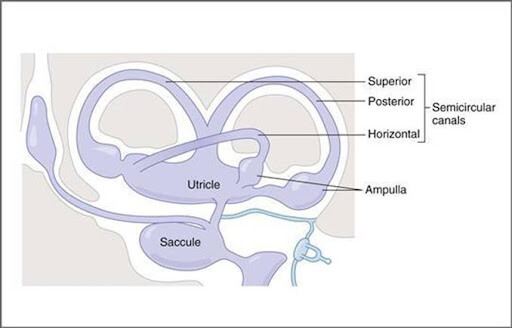

In the inner ear, there are five vestibular organs which detect rotational, straight-line movements, and acceleration of your head. They consist of three semicircular canals, the utricle, and the saccule.
The information from these vestibular organs is integrated in the brain with other information about vision and touch sensation to keep our balance, stabilize our head during movement, and maintain posture.
With Vestibular Neuritis, the inflammation affects local blood flow or damages vestibular nerve cells. This makes the vestibular organs less able to properly sense your spatial orientation and head motions, which results in those symptoms of dizziness, imbalance, and vertigo.
How is Vestibular Neuritis Diagnosed?
There are many factors and tests used to help skilled clinicians diagnose Vestibular Neuritis.
- 1. Patient history: What symptoms did you experience? What was their duration or pattern of onset, does it match what is typically expected? Are the movements worse with head movements?
- 2. Physical assessment: Ruling out red flags and other neurological causes and performing tests that pinpoint the cause of vertigo/dizziness onset. More about what to expect during a vestibular physiotherapy assessment here.
- 4. Vestibular Laboratory Testing: vestibular eye reflexes and control, positional tests, and other vestibular tests such as the Head impulse test and Vestibular evoked myogenic potential (VEMP) testing.
Other conditions that can cause dizziness and imbalance:
Vestibular Neuritis itself is not life threatening, but distinguishing the diagnosis from other urgent disorders such as a stroke is important. Other conditions that also cause dizziness and imbalance:
- BPPV (Benign Paroxysmal Positional Vertigo) – the most common inner ear disorder. It is a mechanical vestibular disorder where the crystal particles dislodge and cause vertigo that is brought on with very specific head positions. On the other hand, Vestibular Neuritis is less dependent on specific positions and has more variation in the symptoms you feel.
- Labyrinthitis – often confused with Vestibular Neuritis. Whereas Vestibular Neuritis affects only the inner ear, Labyrinthitis affects the entire ear, resulting in additional symptoms of hearing loss and tinnitus.
- Central vestibular pseudoneuritis
- Migraine headaches
Treatments for Vestibular Neuritis
The management for Vestibular Neuritis involves medications as well as vestibular rehabilitation or vestibular physiotherapy.
Medications for Vestibular Neuritis:
Vestibular Suppressant Medications
Vestibular suppressant medications are prescribed to relieve your symptoms during the acute phase. These medications reduce the severe nausea, vomiting, and vertigo by suppressing the vestibular system temporarily but don’t cure the disease.
There are a number of treatments aimed at reducing the symptoms of Vestibular Neuritis including:
- Serc (betahistine dihydrochloride)
- Gravol (dimenhydrinate)
- Zofran (ondansetran)
- Intravenous (IV) fluids for hydration in the hospital if there is severe vomiting
They are used only during the first several days because they may delay recovery and result in long-term dizziness if they’re used for long periods of time. Contact your pharmacist or doctor for more information.
Steroid Therapy
Early use of corticosteroids has shown some evidence in improving the extent and rate of recovery of vestibular function. This type of treatment can help if the Vestibular Neuritis is being caused by an infection and inflammation.
However, currently, there is not enough evidence to make treatment recommendations because it’s still unclear how effective it really is or when the optimal time to administer this treatment is. As a result, this treatment should be considered on an individual basis and will depend on your specific case.
How Can Vestibular Rehabilitation (or Vestibular Physiotherapy) Help Vestibular Neuritis?
The goals of Vestibular Physiotherapy are to improve dizziness, balance, and overall physical function in patients with Vestibular Neuritis.
Especially when treatment is started early, vestibular physiotherapy has been proven in many recent clinical studies to be effective to:
- Decrease recovery time
- Improve dizziness and quality of life
- Retrain the brain to adapt to the changes experienced – called “central compensation”
- Realign the vestibular reflexes
Studies have shown that a vestibular rehabilitation program initiated early with standard care resulted in better outcomes in dizziness and daily life functioning than just standard care alone in patients with Vestibular Neuritis.
Studies also show significant growth in the grey matter volume in the areas of your brain that processes vestibular information with vestibular physiotherapy.
What will vestibular physiotherapy look like?
Assessment:
- Vestibular physical therapists will evaluate the different parts of the body that contribute to balance, including the vestibular system, eyes, sensation, and muscle control.
- Identify specific problems unique to each patient to target during treatment sessions.
Treatment:
- Begins with a focus on static stabilization, then dynamic exercises
- Interventions to stabilize gaze during head-eye-body movements (visual tracking) and decrease motion sensitivity (habituation exercises).
- Active balance tasks, goal-directed movements, walking, and head movements improve endurance and proprioception (positional awareness) and allow postural regulation to develop quicker.

Don’t wait to get help!
Book an appointment today to see our certified Vestibular Physiotherapist, our Dizziness, Vertigo and Balance Clinic can help with your specific conditions.
If you have questions, give us a call or email us at inquiries@physioiplushealth.com
Try a free consultation
Unsure whether vestibular physiotherapy can help you? We offer a complimentary phone consultation with a certified vestibular physiotherapist to discuss your issue and provide honest advice about your treatment options.
FAQ
Some patients (around 10-15%) may develop secondary BPPV on the side of the affected inner ear in the initial couple weeks. Sometimes when a certain branch of the vestibular nerve is affected, the calcium carbonate crystals within a vestibular organ (the otolith organ) can be dislodged into the semicircular canals. The good news is that BPPV is also treatable, typically within 1-3 visits.
Other symptoms, such as headaches, are usually absent. However, some patients do experience an onset of headaches, or an increase of headaches from previously. This may be because of the strain on the head caused by the brain trying to deal with these dizziness, nausea, and visual symptoms. Headaches can also be caused by neck pain and strain, referring to the head.
Fortunately, the severe vertigo and acute symptoms should improve significantly in the first few days. A majority of patients are symptom-free after 6 weeks of symptom onset, especially if one is performing vestibular physiotherapy. Some can experience persistent symptoms with fluctuations lasting months or years, as they don’t achieve adequate vestibular compensation especially if they completely avoid the movements that trigger the symptoms. Vestibular rehabilitation significantly improves the symptoms and recovery outcomes.
In the large majority of patients (95%), Vestibular Neuritis is only experienced once in the lifetime. It is possible to return but only truly reoccur in about 1.9% of cases.