
How to Get Rid of Knee Osteoarthritis Pain


Many people are living with knee pain, and there are many reasons for knee pain. However, many people, through years of degenerative changes, can develop knee osteoarthritis.
It’s important that a proper diagnosis is made through your family doctor. But, once you’ve been diagnosed, you might be wondering what to do for your knee pain. This article will reveal to you many treatment options to help ease knee pain and bring comfort back to your life.
In this blog, you’ll learn about the benefits of:
- Exercise
- Weight Loss
- Physiotherapy
- Braces
- Injections (Hyaluronic Acid or Cortisone)
- Surgery
Exercise
You may feel like movement and exercise will only damage your knees further, and this is a common misconception. The truth is, exercise is actually very good for knee osteoarthritis. It can help keep the remaining tissues in the knee healthy and moving. Additionally, gentle exercise can actually act as pain relief!
Choosing the right exercises can be tricky and guidance from a knowledgeable professional is important. A wonderful organization that educates and leads exercise programs specifically for knee osteoarthritis is the GLA:D program. You will enjoy some group sessions of strengthening exercises geared towards protecting your knees and having them support your lifestyle.
GLA:D has many clinics throughout Canada so there may be a convenient location near your home. And, if distance is an issue or you have difficulty leaving the home, GLA:D also offers virtual sessions for further convenience.
Weight Loss
Not every person with osteoarthritis has a high body max index otherwise known as BMI. However, if you happen to be carrying some extra weight, this can put more pressure on your knee joints. Sometimes reducing your weight can offload your knees just enough to significantly reduce your knee pain.

If you are interested in pursuing weight loss, consulting your family doctor and a dietician is highly recommended. They can provide you with some dietary considerations for managing your daily caloric intake.
Additionally, increasing your physical activity will help utilize your calories, instead of storing them in your body. This can be as simple as going for daily manageable walks, or as intense as hiring a personal trainer. Just remember that exercise is easier to maintain if you keep it enjoyable.
Physiotherapy
When it comes to non-surgical management of knee osteoarthritis, physiotherapy is one of your best bets to easing your knee pain. It’s highly recommended to try conservative management before surgery, as surgery is invasive and might not be necessary for you to live the life you want.

At Physioplus, there is rarely a day we don’t see a patient with knee osteoarthritis. You will find our physiotherapists are well-educated and competent in providing you with lifestyle recommendations and exercise programs to help manage your knee pain.
Your initial assessment will include a comprehensive look at how you live your life, how your knee pain is impacting it, and what your personal goals are. Together, you and the physiotherapist will develop a realistic plan to manage your knee pain and achieve your goals. To book an assessment with one of our physiotherapists, click on the link below.
Braces
When you have degeneration of the joints of your knees, the alignment of your bones can change. This places extra stress on the knees in specific spots that can cause pain. And while strengthening of the muscles around the knee can help realign and support your knees, sometimes it’s still not enough to get you back on your feet and active.

Thankfully, you have access to custom knee braces that have the ability to relieve the pressure within your knees. Physioplus has a few varieties of knee braces that can help you get back to the activity levels you are used to.
From high to low impact sports, there are different braces that you can be provided. At Physioplus, Michelle DeMarchi is our resident gait analysis and sports bracing specialist. Michelle will find the right type of brace and fit, so you can get back to the sports and activities you love. Book an appointment with Michelle DeMarchi today for a consultation and fitting of your custom brace.

Injections of Corticosteroids or Hyaluronic Acid
You may have tried many conservative ways to achieve pain relief. But nothing seems to get you to a comfort level that allows you to get back to your life. Where exercise, bracing, and pain killers fail to provide you comfort, there is an option for Hyaluronan or Corticosteroid injections. But what do these injections do?
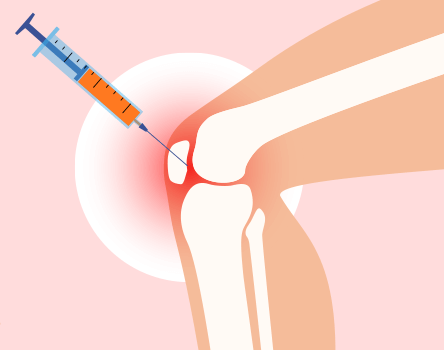
Hyaluronan injections add a natural compound known as Hyaluronic Acid to your joints. Hyaluronic Acid is already found in your joints but may have thinned out in your knees. This injection is used to lubricate and reduce the friction as you weight bear and bend your knees. Depending on your osteoarthritis severity, this injection’s benefits typically last around 3 months but can be as long as 6 months.
Corticosteroid injections provide you with an anti-inflammatory effect in the knee. This can reduce the swelling and discomfort you experience. The benefits from corticosteroid injections vary depending on severity lasting from 6 – 12 weeks.
Have a discussion with your family doctor if you wonder if either hyaluronic acid or corticosteroid injections may be necessary.
Surgery
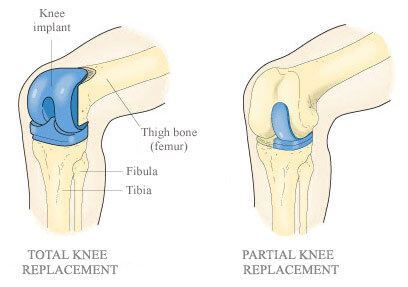
When all other treatment options are not providing you with any relief, sometimes surgery is your best option. You may qualify for either a partial knee replacement, where they replace part of one of your knee joint bones with a prosthesis, or, a complete knee replacement where they replace the entire joint with a prosthetic articulating surface. In both of these surgeries, they leave you with the rest of your leg but only replace the surfaces of your joints that make up your knee joint.
Once having finished your surgery, it’s important that you work with a physiotherapist to make sure you can recover quickly and regain as much physical function as you can.
Many people, around 90%, having had a knee replacement find that they have a significant reduction in pain and are able to live a happier, more active lifestyle. And, if longevity is of concern, your new joint can last anywhere from 15 – 25 years.

If you have recently had a knee replacement and need a physiotherapist to help you rehab, Physioplus has an excellent team of therapists who can guide you to recovery. To book an appointment with one of our physiotherapy team members in the Bloor West Village and Kingsway area, click on the link below.
Book with one of our therapists.
This blog was written by Andrew Taylor, a Physiotherapy student at the University of Toronto