
What are orthotics and how can they help my foot pain?

Your feet are so important, they are the foundation for your ability to perform most of your daily tasks and to get you from point A to point B. If you’re experiencing foot pain, you know how much it can impact your daily life. You may have heard of orthotics, but what are they and how can they help your pain?
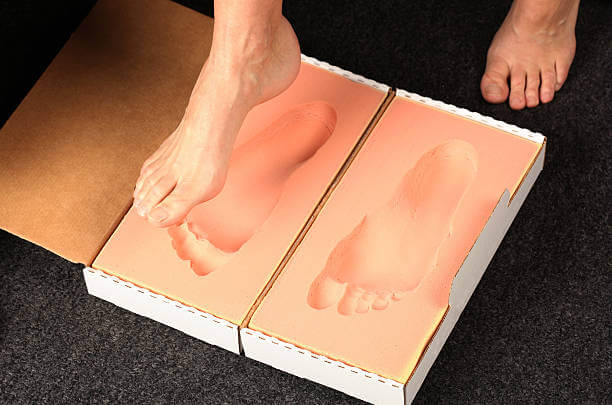
Orthotics are custom made moulds of your feet that insert into your shoes. They are designed to provide support to the muscles and tissues in the bottoms of your feet.
They are often prescribed as part of a larger treatment plan to treat different foot and ankle conditions. Orthotics are often recommended in combination with physiotherapy treatment and exercises to support and strengthen the muscles in your feet.
3 Types of Orthotics
When you hear the word orthotics, you might think of the shoe inserts that you can buy at your local drug store.
The reality is that orthotics are much much more than this. The genetic inserts that you buy over the counter can provide some general cushioning but they are one size fits all and don’t take your specific needs into consideration. As a result, they might only provide you with temporary relief.
A true orthotic is a highly customised shoe or heel insert that is made for your feet by a chiropodist. A Chiropodist is a foot specialist who is highly trained to assess the specific needs of your feet and create an original orthotic designed to support your needs and lifestyle.
Custom orthotics come in many different shapes and sizes, but can fall into 3 broad categories.

Rigid orthotics
These types of orthotics are built to support the joints within your feet. Rigid orthotics are often made of hard materials such as plastic or carbon fiber. These types do not change shape and generally last a long time.
Semi-rigid orthotics
If you are an active person who loves to participate in sports, running, or other athletic activities, these are made for you. Semi-rigid orthotics are designed with enough support to alleviate your pain, while also providing enough flexibility to allow you to train with ease.
They are made up of multiple layers of soft material that are reinforced with a more rigid material such as plastic and can be customised for specific sports, making it the best orthotic for most athletes.
Soft orthotics
These orthotics are primarily used to relieve pressure from sensitive areas of your feet. If you are experiencing heel pain due to high impact activities, but your foot mechanics and posture are normal, these are a great option.
They are made of soft, compressible materials and are often used to treat arthritic, deformed, or diabetic foot conditions.
How can orthotics help me?
Although orthotics are worn on the bottom of your feet, they don’t ONLY help with foot pain. Did you know that ankle, knee, hip and lower back pain can all be addressed with orthotics?
Orthotics can be beneficial for more than just relieving your foot pain, they can also:
- Increase your balance by improving the alignment of your feet and ankles
- Prevent bunions and clawed toe from getting worse
- Improve the posture of your lower body
- Help you stay active and live a healthier lifestyle
- Get you back into those sports and activities you love
- Provide general comfort
Orthotics can treat many common conditions including back pain, arthritis, bunions, and plantar fasciitis.
Orthotics are not meant to be a quick fix. They are often prescribed as one part of a larger treatment regimen such as physiotherapy.
A physiotherapist can assess your posture and function of your feet and provide you with exercises to strengthen the muscles in your feet and toes.
A chiropodist is a foot specialist who can take a very close look at your feet and provide you with a custom made orthotic to support the needs of your feet.
The combination of physiotherapy and orthotics generally provides very good results and often helps individuals avoid more invasive treatments like surgery.
If you’re experiencing foot pain and are wondering whether or not orthotics may be the right fit for you? We have a Special Program called Orthotics & Foot Pain Clinic. Book an appointment with our chiropodist and he will determine the cause of your heel pain and point you in the direction of which type of orthotic may be best suited for you.
This blog was written by Andrew Taylor, a Physiotherapy student at the University of Toronto
FAQ
What can I expect when I meet with a chiropodist?
On your first visit with a chiropodist, they may ask you some questions about your past medical history, any changes or pain you have been experiencing, as well as questions about your lifestyle and physical activities.
They will then assess your alignment in standing, and walking. Additionally, they will look at other functional tasks that are specific to your daily or sports activities.
How do they make orthotics customized to my feet?
The most common method to create an orthotic is by creating a 3D mould of the bottom of your feet using 3D laser scanning. It is quick and easy – you simply place your foot into a #d scanning device, or your chiropodist may use a scanning app from a smart tablet.
Your chiropodist will then take the image and upload it into a computer program. Once in the computer, your chiropodist will be able to make small adjustments to the 3D image in order to improve the alignment and support of your feet.
Once your orthotics are made, you’ll schedule a fitting with the chiropodist. This is to make sure they fit in your shoes and provide you with the support your foot needs.
How much do orthotics cost?
The price of orthotics vary depending on the type of orthotic you need and and if you require a custom shoe. Most orthotics cost between $300-$500 per pair.
Most insurance companies have coverage for orthotics. When checking your policy, make sure to ask these important questions:
- How much does my insurance voer per pair of orthotics?
- How many pairs of orthotics am I covered for?
- Do you require a prescription from a medical doctor?