
Top 6 Conditions that Orthotics can Treat
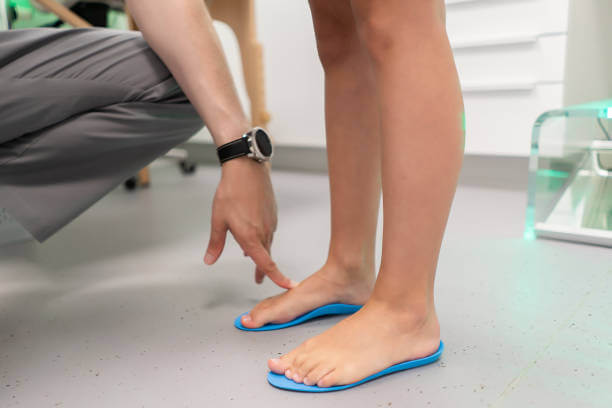

Your body goes through a lot in your lifetime. Inevitably, as you grow older you might find yourself developing stubborn aches and pains, feeling tired more often, and not exercising as much as you used to.
What if I told you that a simple insert in your shoes could help alleviate your pain and get you back to doing the things you love?
Foot orthotics are custom made moulds that are designed to support the tissues, joints, and muscles in your feet.
Not only do they provide comfort, but they are designed to help treat and even prevent some common conditions and injuries that occur in your feet.
Orthotics can treat MANY conditions, however the top 6 most common conditions that benefit from orthotic use are:
- Flat feet or high arches
- Low back pain
- Bunions
- Diabetic Neuropathy
- Plantar Fasciitis
- Knee Pain
1. Flat feet or high arches

Have you ever had anyone nag you about wearing flat shoes with no support? I know I have.
It’s known that wearing unsupportive shoes may contribute to flattened arches, or “flat foot” and because of this, it’s often assumed that having high arches is better.
The reality is that there is no “perfect” foot posture. Having too high or too low arches can contribute to foot pain. The good news is that orthotics can help with both.
High arches
If you’re wondering what high arches are, it’s in the name. Your foot has a dome shape to the bottom. However, in some cases, you may have higher doming of your foot than average.
This can lead to more of your weight being put into the heel of your foot and balls of your toes. When your weight is focused onto these small areas of your feet, you may find yourself more prone to foot pain.
Your high arch requires a little extra support from the underside. Custom made orthotics can help even out the distribution of your weight in your feet and place your weight where the foot naturally can handle it.
Flat feet
The opposite of high arches is flat feet. This occurs when the muscles in the bottom of your feet that support your arches are weak. When you stand, the muscles cannot support your arches so they become flattened, allowing your entire sole to touch the ground.
Your feet carry your entire body weight throughout the day, so if these muscles are weak and stretched, it can lead to pain especially during activities such as standing or walking.
When experiencing foot pain, you might be quick to turn to those soft, cushioned shoe inserts that you can buy at your local drugstore. However, flat feet often need more firm support to help lift your arches and improve the alignment of your feet.
On the other hand, you don’t want an orthotic with an arch that is too high or it can put too much pressure on the bottom of your foot which will only cause you more discomfort.
A chiropodist is a foot specialist who can help you determine the best type of orthotic for you. They will complete a thorough assessment and take a mould or scan of your feet in order to develop an orthotic that is designed to support the structure of your unique foot shape.
2. Low Back Pain

Back pain is very common, affecting 8/10 adults at some point in their lifetime. Back pain can arise from many different causes, but did you know that your feet may be the culprit?
When you stand, walk, and go about your day to day life, there is a chain reaction of forces that moves from your feet, to your ankles, through your knees and hips and all the way into your back.
If you have a healthy posture, this chain reaction force transmits well, allowing you to move through your day with ease.
However, if you have an injury or change in posture somewhere along the chain, the forces don’t transmit properly, which can cause increased stress in different areas along the chain.
To sum it up, changes in your posture (even in your feet!) can cause back pain.

Orthotics are shown to be effective in treating non-specific low back pain, or in other words, back pain without a clear reason.
Orthotics have been shown less effective in helping with specific reasons for low back pain such as disc herniations or degenerative changes.
In the case that your foot posture or positioning is contributing to your low back pain, orthotics can be of great use. Orthotics help realign your feet by providing extra support where needed and providing cushioning in the more sensitive areas.
3. Bunions

Have you noticed a bump starting to form at the base of your big toe, or that it looks like your big toe is turning outward towards your other toes? If so, it’s possible that you may be starting to develop a bunion.
There are different causes for bunions, such as injuries, abnormal posture, or wearing shoes that are too small. Bunions develop when there is pressure on your toes that causes the joint to move out of place.
Bunions can be very painful and can affect the way you stand and walk. Orthotics can alleviate the pain and pressure caused by bunion by changing the way your foot sits in your shoe and improving the posture of your feet.
4. Diabetic Neuropathy

If you have been diagnosed with diabetes, you may have been warned about diabetic neuropathy.
Diabetic neuropathy is a condition that occurs when high blood sugar levels start to cause nerve damage, which can result in weakness, numbness, and tingling in your feet.
When this happens, your feet become more susceptible to infections, blisters, or pressure ulcers. A chiropodist can provide you with custom made orthotics to protect your feet and provide support where you need it in order to prevent sores from forming.
5. Plantar Fasciitis

Do you feel a sharp pain in the bottom of your heel when you walk, run or stand? Chances are you’ve begun to take part in a new sport, or maybe you’ve started working a new job that has you on your feet all day.
The most common cause of heel pain is a condition called plantar fasciitis. It’s a condition that causes small tears and inflammation in the tissue that runs along the bottom of your foot between your heel and your toes, called plantar fascia.
It commonly is caused by too much pressure or strain on the bottom of your foot, due to quick changes in activity levels, ill-fitting shoes, or foot abnormalities.
Orthotics can help plantar fasciitis by providing support to the bottom of your feet which relieves some of the pressure on your plantar fascia.
6. Knee Pain

Would you believe me if I told you that your knee wasn’t the cause of your knee pain? Well, hear me out…
Oftentimes when you have pain or an injury, it can be caused by the joint above or below it.
For example, if your feet are falling inward or outwards, this abnormal alignment causes a chain reaction up into your knee joint. When your posture is off, your body has to work extra hard to get you through your day. So simple things like standing or walking for a long period of time can begin to cause you pain.
Orthotics can correct your foot alignment allowing your ankles, knees, and hips to be in proper alignment which will decrease your risk of injury and get rid of your pain.
So, now you know a bit more about 6 common conditions that orthotics can treat, but you may be wondering, how do I get orthotics?
Book an appointment with one of our highly trained foot specialists. During your initial assessment you will have the opportunity to describe your pain, and how it’s affecting your life, and set up an action plan to treat that pain.
A foot specialist will be able to create custom made Orthotics for your specific needs to finally help with your pain and get you back to feeling your best.
Contact us to Learn More About Our Orthotics and Foot Pain Clinic!
This blog was written by Andrew Taylor, a Physiotherapy student at the University of Toronto
FAQ
How long do orthotics last?
The lifespan of your orthotics depends on how often you use them and how well you take care of them. It is recommended that most orthotics be replaced every 2-3 years.
Can I wear my orthotics right away?
Yes! However it’s recommended that you wear your orthotics gradually, starting at 1-2 hours/day and increasing the amount of time you wear them each day. Your chiropodist will provide you with a more detailed guide when you receive your orthotics.
How long does it take to get orthotics?
This depends on where you go to get your orthotics. From the time of casting, it generally takes anywhere from 2-4 weeks for you to receive them. Once your orthotics are made, your chiropodist will schedule an appointment with you for a fitting to ensure that they fit you properly.